

Let’s take a closer look at a modern casino floor. The truth is, every spin you see is a unique, isolated event. It has no memory of the last spin and no plan for the next.
This isn’t magic. It’s all about math. The key player behind the scenes is a Random Number Generator (RNG). It’s a digital algorithm that works faster than you can blink.
Imagine it as the universe’s most diligent and honest bouncer. Its job is to make sure everything is random. The position of every symbol on the virtual reel is decided in a split second. Only then does the machine check for matches.
This means looking for slot machine patterns is just a human trick. Our brains love stories. We think a fourth cherry is “due” after seeing three. But the RNG works like quantum mechanics.
You’re not playing a game of connect-the-dots. You’re watching a quantum number generator in a fancy suit. Let’s explore why our pattern-seeking instincts are up against this perfect digital logic.
Debunking pattern prediction myths
In the casino’s digital world, the patterns strategy shows our cleverness and our tendency to fool ourselves. Players follow a set of bets, like 1-1-1-2-2-2-3-3-3-2-2-2-1-1-1. They think this pattern can match the game’s rhythm.
This is a great example of psychology, not a secret to winning. The illusion of control is strong. Following a pattern makes chaotic play seem structured.
It’s like a trader sticking to a chart pattern even when it’s outdated. The seductive appeal is that of a secret code, like Da Vinci’s cipher for the casino. But the machine doesn’t care about your numbers.
Real pattern analysis in slots isn’t about guessing the next spin. It’s about understanding your own actions. This method is great for managing your bankroll. It stops you from betting more than you can afford to lose.
You control your actions, not the random number generator. This leads to a calm, strategic play. It gives you a sense of control, making you feel like a strategist, not just a gambler.
For more on myths, check out our guide on slot machine myths debunked. You’ll see how pattern play fits into casino stories. The house edge doesn’t care about your patterns. But your wallet might thank you for the discipline.
So, use a betting pattern if it helps you stay focused. But remember, it’s not a way to beat the machine. The RNG doesn’t remember, doesn’t have rhythm, and doesn’t respect your patterns.
Statistical variance vs patterns
Variance in slots shows us that chaos has a mathematical rhythm. Statisticians call it randomness, a mix of predictability and unpredictability. Your task is to grasp the overall structure, not predict each detail.
Volatility and RTP (Return to Player) are key players. Volatility is like the slot’s personality. It can be steady or unpredictable. RTP is the long-term promise of the slot, like a budget for millions of spins.
Think of RTP as the slot’s budget. It promises to pay back 96% of all bets over time. Your short session, whether you win or lose, is just a small part of this bigger picture.
Our statistical analysis helps us understand this. Volatility affects how often and how much you win. A high-volatility game isn’t broken if it doesn’t pay out right away. It’s just building up to a bigger win.
| Volatility Level | Payout Frequency | Payout Size | Typical Player Experience | Analogy |
|---|---|---|---|---|
| Low | High | Small | Frequent, small wins. Bankroll depletes slowly. | The reliable coffee friend. |
| Medium | Moderate | Moderate | Mixed bag of small and medium wins. | A balanced diet of surprises. |
| High | Low | Large | Long droughts followed by big wins. | The extravagant gift-giving cousin. |
The table shows a range of possibilities, not a clear pattern. High-volatility slots are just following their program, not failing.
Our brains love stories, so we see patterns where there are none. We might think a slot is “hot” or “cold” based on a few spins. But in a truly random system, patterns are not only possible but inevitable.
Flipping a coin 100 times, you’ll likely see sequences of five heads. This doesn’t mean the coin is “hot.” It’s just showing us the natural variance in a random system.
So, when you’re playing, remember you’re not trying to find a pattern. You’re riding a wave of probability. This wave has a shape, but it never repeats exactly. Understanding this is key to playing smarter.
Hot and cold slot fallacies
The idea of a ‘hot’ slot machine is a myth. It’s like searching for a unicorn at a poker table. Players believe in it, but it’s not true. The Random Number Generator technology proves it.
Every spin is a new event. A machine that paid out big is just as likely to pay again as any other. The RNG doesn’t remember or feel anything. It just keeps producing random numbers.
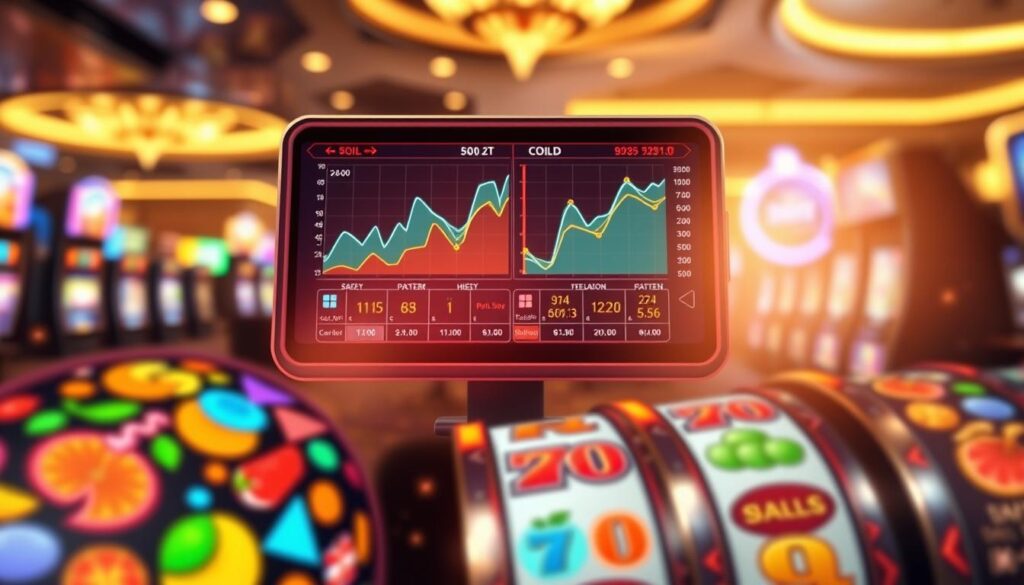
Changing machines after losing is based on a fallacy. It’s like a psychological reset. You’re not outsmarting the machine; you’re just changing your own mindset.
Switching TV channels because you don’t like the show is similar. The RNG has already decided millions of outcomes. Your luck or mood doesn’t change its code.
Looking for ‘hot’ and ‘cold’ cycles is a human mistake. We try to find patterns where there are none. In slots, this can cost you money. It makes you chase losses or leave right before a win.
The truth is simple but not exciting. There’s no secret pattern to find. Instead, focus on understanding the game and managing your money. Leave the pattern analysis for other areas, like the stock market. On the casino floor, it’s just a story we tell ourselves.
Streak management and recognition
Let’s cut through the noise: streak management in slots isn’t about reading the machine’s mind, but about taming your own. It’s like personal finance theater, where you’re both the actor and the audience. The 15-bet pattern sequence isn’t a crystal ball. It’s a way to keep your behavior in check.
This system works because it’s strict. You follow a set bet progression and then cash out after a series. The “recognition” here is about knowing your own greed and frustration. It’s a way to stop chasing losses, a common trap.
It takes discipline to stick to it. You must set winnings aside after the pattern series. No going off track. This turns a game of chance into a practice of Stoic philosophy for today’s world.
You control your bets and when to leave. But you can’t control the outcomes. Seen this way, streak management is a smart way to exit. It’s your plan to leave before the house edge takes its toll. The table below shows how it helps manage emotions.
| Emotional Trigger | Streak Management Tactic | Behavioral Outcome |
|---|---|---|
| Greed (after a win) | Follow the 15-bet sequence exactly; lock away profits at the designated point. | Prevents “winner’s tilt” and irrational bet increases. |
| Frustration (during losses) | Adhere to the predetermined progression without emotional deviation. | Breaks the sunk cost fallacy cycle of chasing. |
| Boredom (during a lull) | Let the system dictate action, not a desire for excitement. | Maintains discipline when the game feels uneventful. |
| Overconfidence (perceived hot streak) | Cash out at the system’s mandated point, regardless of feeling “lucky.” | Protects capital from the inevitable regression to the mean. |
The system’s real value? It gives you a script. When uncertainty is high, it helps you stay on track. You don’t have to make tough decisions in the moment. The decisions are made for you, in advance, by your calmer self.
This isn’t prediction. It’s a way to protect yourself from your worst impulses. The pattern gives you a structured game within an endless one. You play your series, take your result, and walk away. That’s the recognition that matters. You’ve recognized the game for what it is and built a cage strong enough to hold your own nature.
True streak management means finding your exit before you need one. It’s the art of leaving the party while you’re having fun. Not when the lights come on and you’re counting your losses.
Data tracking for mobile players
In today’s world, tracking every spin of a mobile slot is like being a Wall Street quant. Every spin is a data point. Every bonus round is a market event. The urge to log it all is powerful, even noble. After all, how can you improve what you don’t measure?
This instinct isn’t wrong. Keeping basic records of your sessions—wins, losses, total spend—is a recommended practice. It promotes mindfulness. But here’s where the train jumps the tracks. Players often mine this tiny, personal dataset for predictive statistical analysis. They look for the “hot” hour, the “lucky” game, or the pattern in the chaos.

Let me play peer reviewer to your personal research. Your 200 spins of data? It’s a single grain of sand on the beach of millions that define the game’s true math. Your notepad is not a crystal ball. It’s a spending diary.
Think of it like trying to predict a presidential election by only polling your apartment building. Your results are fascinating, personally biased, and utterly useless for forecasting the national outcome. The sample size is laughably small. The same flaw cripples your slot log.
So what’s the real value of tracking? It’s not about beating the machine. It’s about understanding your personal entertainment cost. It’s a budget tool. You see your cash flow. You identify if you’re playing beyond your means. This is powerful, practical knowledge.
True statistical analysis requires a sample size you can’t possibly gather. It operates on the scale of the casino’s server, not your iPhone. The game’s high volatility vs low volatility slots characteristic, for instance, is baked into millions of simulated outcomes. Your 50 sessions won’t reveal it.
Here’s a simple breakdown of what your data can and cannot tell you:
| What Your Tracking CAN Reveal | What Your Tracking CANNOT Reveal |
|---|---|
| Your average session cost | The “due” win or loss |
| Your personal play frequency | A game’s hidden pattern |
| Budget adherence over time | Future spin outcomes |
| Emotional triggers for spending | The “hot” or “cold” state of a slot |
Embrace tracking for its true purpose: conscious play. Jot down your start and end balance. Note how long you played. This turns gambling from a blind habit into a measured activity. You become a smarter consumer, not a failed prophet.
The irony is rich. In seeking patterns through amateur analysis, you miss the only pattern that matters: your own. The goal shifts from prediction to self-awareness. That’s a win no RNG can randomize.
So keep your notes app open. Just remember its job. It’s a financial diary, not a research lab. Your data holds the key to your wallet, not to the slot’s algorithm. That’s the only statistical analysis that pays off.
Scientific approach to slot analysis
Slot analysis is like a science fair project. Pattern spotting is like a baking soda volcano—it’s flashy but simple. Real analysis needs discipline and a close look at the game’s blueprint. So, what does a thorough, statistical analysis look like without the magic?
The paytable is your main source, the game’s rulebook. It’s not about finding magic symbols. It’s about understanding paylines, bonus triggers, and icon values. This is your basic data.
Then, you look at RTP and volatility. Think of them as a slot’s personality. RTP (Return to Player) is the game’s edge over time. Volatility tells you if the game is slow or fast.
Choosing a game is like a pre-flight checklist, not a crystal ball. It’s about finding a game that fits your goals and budget.
- Know the Rules: Master the paytable and bonus mechanics.
- Know the Math: Accept RTP as the long-term gravity and volatility as the climate.
- Know Yourself: Be brutally honest about your loss tolerance and session goals.
This trio is the only real “edge” you can get: an informational one. It’s the opposite of pattern analysis, which looks for meaning in randomness.
The real skill is not predicting the next cherry. It’s predicting your own reaction to losing. Can you stick to your stop-loss? Will you “chase” because a machine *feels* due? This is where disciplined play helps you manage what you can control.
This is the difference between alchemy and chemistry. Alchemy tries to change base metal into gold with secret patterns. Chemistry follows a proven method, making choices based on what it knows. Your bankroll will thank you for choosing science over magic.
Making informed decisions with incomplete data
The final screen in this game shows a simple truth. You are always playing with incomplete data. The next spin from any modern RNG systems is the ultimate unknown. Your data sheet is blank where it matters most.
An “informed decision” here has nothing to do with predicting slot machine patterns. It means picking a game you find fun with volatility you can stomach. It means setting a loss limit based on your entertainment budget, not a hoped-for streak. Any win is a pleasant anomaly in a stream of pure randomness.
Success isn’t about beating the algorithm — you can’t. It’s about enjoying the flashing light show without buying into the mythology behind it. Smart players focus on making informed choices, sometimes using opportunities like exclusive sportsbook promo codes to add value while staying mindful of their limits. The most profitable pattern you will ever recognize is your own exit strategy. Walking away on your own terms, with your dignity and wallet intact, is the real jackpot.
This is enlightened resignation. You understand the machinery of chance, you respect its absolute authority, and you choose to play within its rules — or more wisely, to stop. That’s the only edge the house can’t program away.
Leave a Reply