

The United States online casino industry achieved a massive financial milestone in May 2026, generating $1.03 billion in gross gaming revenue across regulated states. Market analysts expected strong spring performance following a record-breaking year, but the acceleration past the $1 billion monthly threshold confirms that mobile gaming platforms dominate the broader gambling sector. Real-money digital casino apps on iOS and Android devices accounted for the vast majority of this revenue, overshadowing desktop play by a significant margin. State regulatory boards reported sustained growth across all major verticals, with mobile slots and live dealer table games driving the highest engagement metrics.
Financial reports compiled from data from the American Gaming Association confirm that this represents a 14.7% increase compared to May 2025. Consumer spending habits have shifted permanently toward mobile platforms, forcing major operators to optimize their mobile apps for speed, security, and game variety. The consolidation of sports betting and online casino features into single-app ecosystems creates a frictionless experience for users, driving higher deposit rates and longer session times.
State-By-State Breakdown: Pennsylvania And Michigan Set The Pace
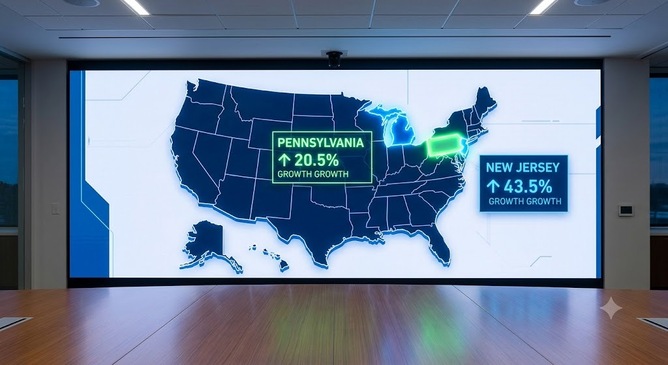
The total $1.03 billion revenue figure is a composite of performance from the seven states where online casinos are fully regulated. Pennsylvania and Michigan established themselves as the undisputed market leaders, generating more than half of the national total combined. New Jersey maintained a strong third position, relying on a mature market and a massive library of approved slot titles to keep players active.
Data published by regional oversight committees reveals the exact distribution of gross gaming revenue for May 2026.
| Regulated Market | May 2026 Mobile Casino Revenue | Year-Over-Year Growth | Primary Revenue Driver |
| Pennsylvania | $321.1 Million | +12.4% | Mobile Slots |
| Michigan | $305.8 Million | +15.6% | Live Dealer & Slots |
| New Jersey | $276.3 Million | +8.9% | Table Games & Slots |
| Connecticut | $72.4 Million | +21.2% | Mobile Slots |
| West Virginia | $28.5 Million | +18.4% | Mobile Slots |
| Delaware | $19.6 Million | +44.9% | Mobile Slots |
Pennsylvania’s dominant performance is supported by aggressive promotional campaigns from top-tier operators and a highly engaged player base. The Pennsylvania Gaming Control Board reported that mobile slot games alone generated nearly 70% of the state’s total digital casino revenue. The state’s early adoption of live dealer studios keeps high-volume players logged into state-regulated apps rather than seeking offshore alternatives.
Michigan recorded the highest year-over-year volume increase among the big three markets. The state’s success connects directly to its competitive tax structure and operators investing heavily in localized marketing. Delaware, representing a much smaller population, posted an impressive 44.9% growth rate, reflecting the positive impact of its recent transition to a new exclusive platform provider.
The Mechanics Of Mobile Player Retention

Operators are capturing unprecedented revenue by refining the technical performance of their iOS and Android applications. In previous years, mobile casino apps suffered from frequent crashes, poor game optimization, and limited banking options. In 2026, leading brands will have integrated advanced software architecture that mirrors the responsiveness of native video games. High-definition graphics, instant loading times for slot mechanics, and seamless transitions between different game categories keep users engaged for longer periods.
Game developers are releasing titles specifically engineered for vertical mobile screens. This design philosophy eliminates the awkward screen-rotation requirements that frustrated users in older casino platforms. Mobile slots now feature tactile feedback, using the smartphone’s haptic engine to simulate the physical sensation of a real casino machine. These subtle hardware integrations maximize the entertainment value of the apps.
The industry’s current success is a direct continuation of the mobile casino boom tracked earlier this year, where major operators began prioritizing app development over desktop site improvements. Promotional structures adapted to fit this mobile-first approach. Push notifications deliver personalized bonus offers directly to a player’s home screen, creating immediate calls to action that desktop browsers cannot replicate. Loyalty programs integrate seamlessly into the app interface, allowing users to track their reward tiers in real time.
Expansion Of Live Dealer Game Offerings

Live dealer games represent a massive portion of the revenue generated in May 2026. Players seeking an authentic casino experience prefer live-streamed blackjack, roulette, and baccarat over automated games. Mobile platforms upgraded their video streaming capabilities, allowing users to watch high-definition video feeds without experiencing severe battery drain or data usage spikes. The chat functionality integrated into these live games adds a social element that keeps users engaged.
Studios built dedicated broadcast facilities in Pennsylvania, Michigan, and New Jersey to comply with state laws requiring equipment and dealers to be physically located within the state’s borders. These studios operate 24 hours a day, employing thousands of residents and contributing heavily to the local economy. The continuous expansion of these live dealer studios is a direct response to player demand, proving that mobile users want high-quality, interactive entertainment.
Regulatory Shifts And The Future Of Sweepstakes Casinos
The traditional real-money mobile casino market is restricted by state-level legislation, currently limiting operations to just a handful of jurisdictions. Outside of these borders, a massive secondary market of sweepstakes and social casinos operates under different legal frameworks. These alternative platforms offer mobile apps where users play with virtual currency, which can then be redeemed for real prizes.
Recent legislative actions altered the operational map for sweepstakes brands. In early 2026, several states enacted strict restrictions on sweepstakes casino models, citing consumer protection concerns. These bans forced dozens of smaller operators to shut down completely. This legal friction has not slowed the broader mobile gaming trend. The exit of smaller platforms created a vacuum that well-funded, legally compliant sweepstakes apps immediately filled.
Current data from the Michigan Gaming Control Board and similar state agencies highlights a clear regulatory focus on shutting down illegal offshore sites while clarifying the rules for legal operators. States with active legislation observe the massive tax revenue generated by Pennsylvania, Michigan, and New Jersey. Industry lobbyists use the May 2026 revenue data to pitch legalization to lawmakers in states like Illinois and Maryland, emphasizing the financial benefits of a regulated, taxed digital casino framework.
App Security And Streamlined Banking Operations
The financial infrastructure supporting mobile casino apps matches mainstream banking applications in sophistication. Fast, secure payment processing is the foundation of high user retention. Players expect instant deposits and same-day withdrawals. Operators partnered with major financial institutions and digital wallet providers to facilitate immediate transactions.
The integration of biometric security features, such as Face ID and Touch ID, completely replaced cumbersome password logins for most users. This technical upgrade reduces the friction of opening the app, encouraging shorter, more frequent gaming sessions. The following security protocols are now standard across all top-grossing mobile casino applications:
- End-to-end encryption for all financial transactions and personal data transfers.
- Mandatory two-factor authentication (2FA) protocols during the initial account creation and banking setup phases.
These strict security measures protect the consumer and shield the operators from liability, ensuring the platforms remain compliant with state gaming commissions.
Analyzing The Tax Revenue Benefits
The $1.03 billion in gross gaming revenue generated in May 2026 translates directly into hundreds of millions of dollars in state tax revenue. These funds are legally earmarked for specific public works projects, varying by state. In Pennsylvania, casino taxes contribute heavily to property tax relief programs for older residents. Michigan directs a large portion of its digital gaming tax revenue toward the state’s School Aid Fund and First Responder Presumed Coverage Fund.
State governments rely heavily on these consistent tax injections. The mobile casino sector proved to be highly recession-resistant, maintaining steady growth even during periods of broader economic inflation. The May 2026 figures demonstrate that digital gambling is a permanent fixture in the American entertainment economy.
Legislators in states currently debating online casino legalization analyze the tax data from neighboring jurisdictions. The financial opportunity cost of remaining a strictly land-based casino state is becoming difficult for politicians to ignore. The combination of secure mobile app technology, mature regulatory frameworks, and undeniable consumer demand points toward continued revenue expansion throughout the rest of the year.
Leave a Reply