
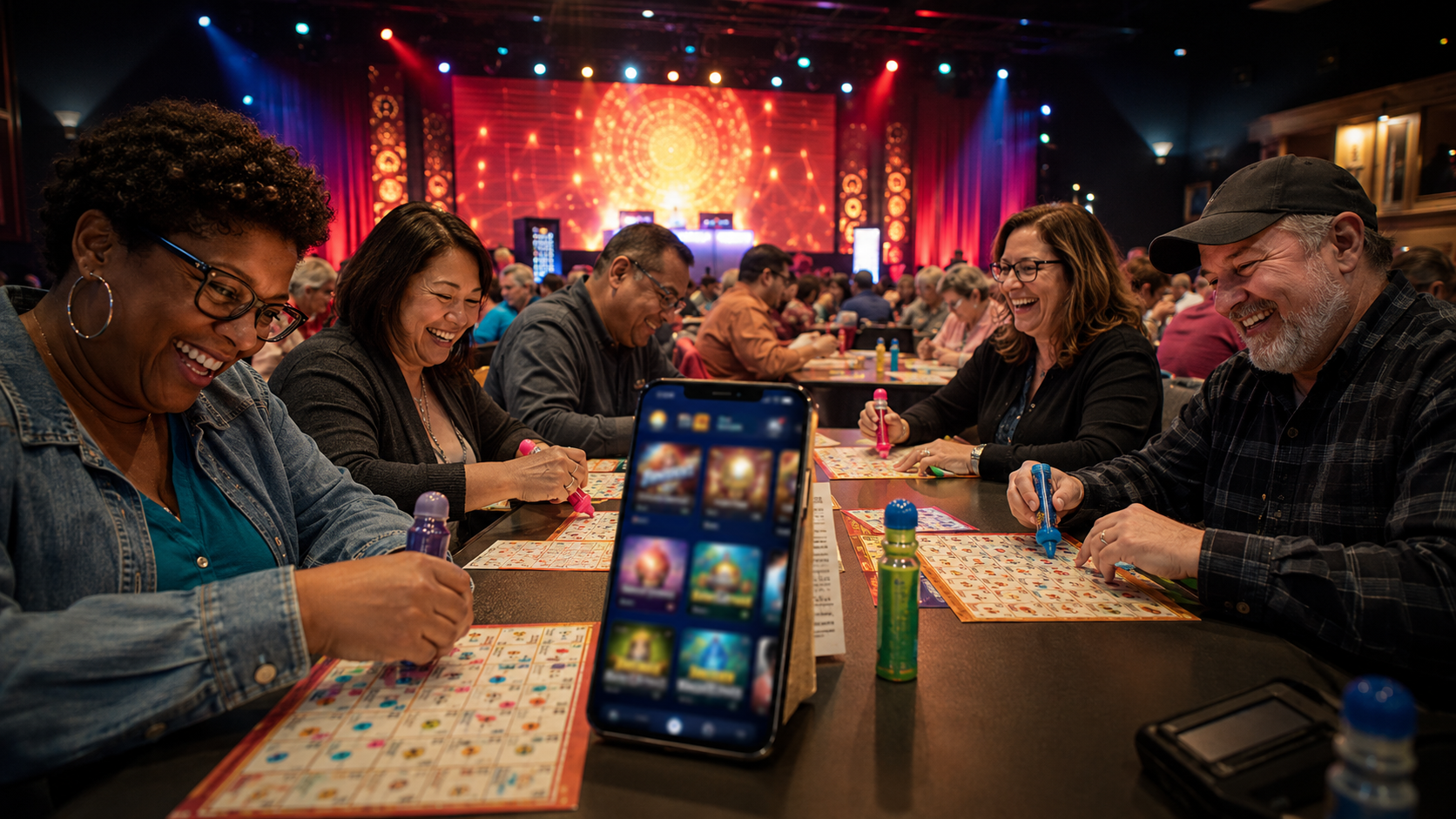
Foxwoods Resort Casino’s July 4 bingo record is more than a casino anniversary story. It is a reminder that classic casino games still carry real market value at a time when U.S. online casino growth is being driven by mobile slots, live dealer tables, app-based loyalty programs, and iOS-first gambling habits. A player identified as Aaron P. won a $440,000 single cash jackpot during Foxwoods’ Firecracker Bingo event in Mashantucket, Connecticut, helping the resort break the Guinness World Record title for the largest payout for a bingo game inside a single bingo house, according to CT Insider.
That kind of land-based moment matters for mobile casino readers because it shows why older game formats are not disappearing. Bingo, slots, roulette, blackjack, and live dealer tables all survive by adapting to new player expectations. In 2026, the strongest casino brands are not treating mobile apps as separate from traditional casino culture. They are using familiar games, recognizable formats, and event-style engagement to keep players interested across both physical venues and digital platforms.
Why The Foxwoods Bingo Record Matters Beyond Connecticut

Foxwoods’ Firecracker Bingo event was tied to a major milestone. The Mashantucket Pequot Tribal Nation opened its original bingo hall on July 5, 1986, and that room eventually became the foundation for Foxwoods Resort Casino, which officially opened in 1992. CT Insider reported that more than 3,000 guests attended the July 4, 2026 event at High Stakes Bingo Hall, where players competed for more than $1 million in total cash prizes.
The official Foxwoods Firecracker Bingo program listed more than $1 million in cash and prizes, $40,000 in door prizes, $40,000 regular payouts, and a $440,000 cash jackpot prize. The same program listed advanced purchase packages of $500 for paper and $1,000 for video, with the main session scheduled for 1:00 p.m. on July 4.
For online casino operators, the lesson is clear. Classic games still work when they are built around clear rules, event timing, community energy, and a format that players already understand. Bingo does not need to look like a new mobile slot to remain relevant. It needs a strong setting, a trusted operator, a transparent prize structure, and a user experience that gives players a reason to participate.
That is also why mobile casino apps continue to lean on familiar game categories. New slot mechanics may change quickly, but many players still recognize the core appeal of number draws, reels, cards, wheels, and live-hosted games. The mobile era rewards speed and convenience, but it still depends on game formats that have decades of player recognition behind them.
How Classic Games Fit The iOS Casino App Model
The rise of mobile casino play has not erased the value of traditional game design. It has changed how players access those games. Instead of walking into a casino hall, many users now open an iPhone app, verify their account, select a game category, and move between slots, live dealer blackjack, roulette, and digital table games within seconds.
That shift explains why classic casino games matter to a site focused on iOS casino play. Mobile casino users do not only search for novelty. Many are looking for a recognizable experience that feels stable, fast, and easy to use on a smaller screen. Bingo’s record-setting moment at Foxwoods shows that players still respond to shared rules and simple game structures, even when the surrounding technology changes.
The same logic applies to the broader US mobile casino revenue trend. Mobile casino growth is often discussed through revenue, app design, and state-by-state regulation, but game familiarity is part of the same story. Players may test new releases, yet many long-term app sessions still come from slot libraries, roulette tables, blackjack variants, and live dealer games that adapt older casino formats for mobile screens.
| Classic Game Element | Land-Based Casino Appeal | Mobile Casino Translation |
|---|---|---|
| Simple Rules | Players understand the format quickly | Faster onboarding inside iOS apps |
| Event Timing | Special sessions create urgency without fake hype | Tournaments, scheduled live games, and seasonal events |
| Social Energy | Bingo halls and tables create shared participation | Live dealer chat, multiplayer formats, and community promos |
| Familiar Visuals | Cards, reels, wheels, and number boards are easy to recognize | Mobile-first layouts with shorter sessions |
| Operator Trust | Venue reputation supports participation | Licensing, app security, and transparent terms matter |
The key is restraint. Mobile casino operators should not turn every classic game into an aggressive promotion. The better approach is to make rules easier to read, interfaces smoother, and responsible play tools more visible. A familiar game loses value if players cannot understand wagering requirements, prize rules, session limits, or withdrawal terms.
What The Record Says About Casino Brand Memory

Foxwoods’ bingo record worked because it connected a current event to a 40-year origin story. The resort did not simply stage a prize event. It tied the moment to the first bingo hall opened by the Mashantucket Pequot Tribal Nation in 1986, giving the promotion a deeper casino-history angle. CT Insider quoted Foxwoods president and CEO Jason Guyot describing the original bingo hall as a “blueprint” for what followed.
That matters for mobile casino brands because app loyalty is fragile. Users can delete an app quickly, switch operators, or compare games across platforms with little effort. Brand memory becomes harder to build when the casino experience is reduced to a grid of game tiles. Classic games can help solve that problem because they carry emotional and cultural recognition that newer game formats often lack.
For iOS casino apps, the strongest version of brand memory may come from combining old and new signals. A player might recognize bingo, blackjack, or slots from a physical casino floor, but the mobile product must still deliver modern expectations: fast loading, clean banking flows, biometric login, smooth portrait-mode design, and clear responsible gambling controls.
Connecticut is a useful case study because it connects tribal casino history with a regulated online gambling market. CT Insider reported that DraftKings is paired with Foxwoods while FanDuel is licensed through Mohegan Sun in the state’s digital gambling structure. The same report said online casinos alone have produced more than $2 billion in player losses since legalization in 2021, underscoring why growth stories also need a responsible gambling context.
That does not make classic games good or bad by themselves. It means familiar formats can scale quickly when placed inside mobile apps, and that scale creates a stronger need for clear limits, state oversight, and player education.
Why Mobile Casino Growth Still Needs Responsible Framing

Foxwoods’ $440,000 bingo jackpot is a legitimate news event, but it should not be used as a reckless gambling message. Large jackpots draw attention, yet they are not typical outcomes. Readers comparing casino apps should treat record payouts as rare events rather than signals that a game is more likely to produce a major win.
The responsible lesson is that entertainment value and financial risk exist at the same time. A bingo hall can create a shared event experience. A mobile casino app can offer convenient access to slots or table games. Neither format removes the need for limits, budgeting, and careful review of game rules. For players who use legal online casinos, state availability and operator terms should come before promotions or jackpot claims.
Connecticut’s public data portal is useful here because it shows how online casino gaming is treated as a regulated reporting category, not just a private app business. The state’s online casino gaming data notes that online casino payment rates are tied to gross gaming revenue and that the Mashantucket Pequot Tribal Nation began on-reservation online casino gaming on December 7, 2021, while the Mohegan Tribe began on-reservation online casino gaming on May 6, 2022.
That regulatory context should shape how mobile casino articles discuss growth. Online casino revenue can be large, but revenue comes from player losses. App improvements can make gambling more convenient, but convenience increases the need for friction where it protects users: deposit limits, time reminders, self-exclusion access, and clear account history.
Players who feel gambling is becoming hard to control should use support resources before continuing to play. The National Council on Problem Gambling’s responsible gambling helpline is designed to connect people with help, and responsible gambling tools should be treated as part of the product rather than a footer link.
What iOS Casino Developers Can Learn From Bingo
The Foxwoods record is also a product-design lesson. Bingo is easy to explain, visually structured, and built around anticipation. Those traits are useful on mobile. The more complex a casino app becomes, the more valuable simple game architecture can be.
Mobile casino apps often compete by adding more slots, more live tables, more providers, and more promotional layers. That can make the product feel crowded. Classic games push in the other direction. They remind operators that clarity can be a feature. A player should be able to find the rules, understand the game flow, identify the cost of participation, and see account controls without digging through confusing menus.
For iOS casino design, classic game formats can support better retention when operators focus on product quality rather than noise. A clean bingo-style number draw, an accessible video poker layout, or a live roulette stream with clear betting controls can feel more useful than a cluttered lobby full of flashing tiles. The format does not need to be old-fashioned. It needs to be readable.
That is especially true on iPhone screens, where vertical design shapes every decision. Slot developers now build games for thumb navigation, portrait-mode reels, and shorter sessions. Live dealer studios optimize camera feeds for small screens. Bingo-style games can use number boards, timed rooms, and session-based play without requiring complex controls. The classic format gives designers a simpler foundation to adapt.
Why Classic Casino Games Still Belong In The Mobile Era
Foxwoods’ $440,000 bingo record shows that classic casino games can still create major attention in 2026, even as mobile casino apps dominate much of the digital conversation. The record worked because it combined history, scale, event timing, and a game format that players already understand.
For slotonlinecasinosios.com readers, the bigger takeaway is that mobile casino growth is not only about new technology. It is about how old casino formats are translated into safer, cleaner, more transparent app experiences. Bingo, slots, blackjack, roulette, and live dealer games remain relevant because they are familiar. Their future depends on whether operators can deliver them with stronger usability, clearer terms, and better responsible play controls.
The mobile casino era does not erase the casino floor. It compresses parts of that experience into an app. Foxwoods’ record-setting bingo event is a useful reminder that the best digital casino products are not always the loudest or newest. Often, they are the ones who respect familiar games while making the rules, risks, and user controls easier to understand.
Leave a Reply