
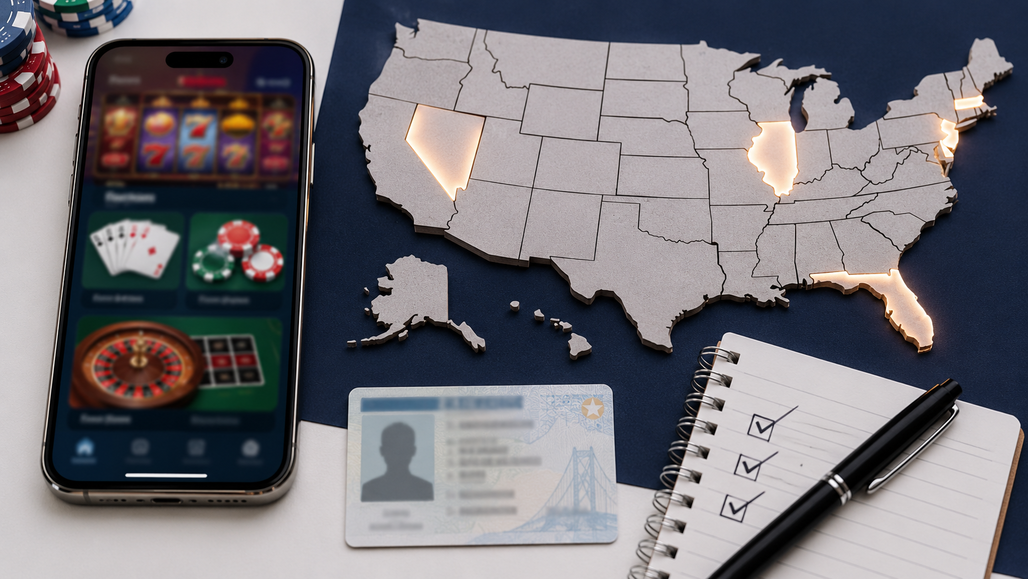
U.S. iPhone casino players have more mobile gambling options than they did a few years ago, but real-money online casino access still depends heavily on the state where the player is physically located. That matters in July 2026 because online casino apps, mobile slots, live dealer games, and digital table games are not available under one national rule. CBS Sports reported on July 6, 2026, that only a small group of U.S. states currently allow legal internet casino apps and casino games, with Maine creating a newer legal wrinkle because it has authorized iGaming but has not reached the same live-app stage as older markets.
For readers comparing iOS casino apps, the safest starting point is not the bonus page or slot library. It is the state check. A casino app that works in New Jersey may not be available in Georgia, California, Texas, Florida, or New York. A sportsbook app in a state does not automatically mean real-money online casino games are legal there. That difference is why iPhone casino users need to confirm location, licensing, operator availability, and account rules before treating any app as accessible.
Why July 2026 Creates A Fresh App-Access Question
The U.S. online casino map looks simple from a distance, but it becomes more complicated once players separate “legalized,” “launched,” “licensed,” and “available on iPhone.” As of early July 2026, widely cited legal-state trackers identify Connecticut, Delaware, Michigan, New Jersey, Pennsylvania, Rhode Island, and West Virginia as live legal online casino markets. Several updated July 2026 guides also include Maine as an authorized iGaming state, but Maine’s live launch timing remains separate from the passage of its law.
That distinction matters for mobile casino players because legalization does not always mean an app is ready to download, fund, and use. States need rules, licenses, operator approvals, technical standards, responsible gambling controls, tax structures, and geolocation systems before legal iCasino apps can function at scale. A player searching the App Store from an iPhone may see brand names, but those brands still need state authorization before real-money casino play is allowed.
Maine is the clearest 2026 example. The American Gaming Association’s State of the States 2026 report said Maine was the only state to pass legislation legalizing iGaming in 2025, with the legislation becoming law early in 2026. That places Maine in the current policy conversation, but players should still distinguish authorized future access from today’s live app availability.
That is the core reason a state-by-state check still matters. Online casino access is not just a question of whether a brand exists. It is a question of whether that brand is licensed in the player’s state, whether casino games are live there, and whether the app can verify the player’s physical location.
Why iPhone Casino Apps Are Not The Same As Sportsbook Apps
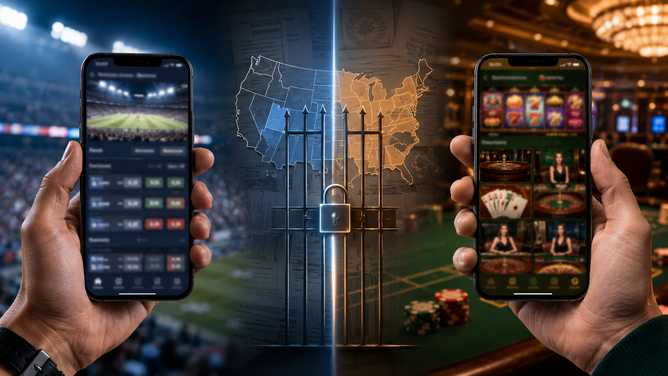
Many U.S. players already understand mobile sports betting because it spread faster after the 2018 Supreme Court decision that opened the door for state-regulated sports wagering. Online casino gaming has moved more slowly. The result is a confusing mobile environment where a user may legally place sports wagers in a state but still lack access to real-money slots, live dealer blackjack, roulette, video poker, or online bingo.
That gap is important for iPhone users because many operators use related branding across sportsbook and casino products. A user may recognize DraftKings, FanDuel, BetMGM, Caesars, BetRivers, or Fanatics from sports betting coverage, but the casino side follows a different state-by-state path. Sportsbook availability does not automatically unlock iCasino availability.
The better review process starts with category separation. A sportsbook app is built around sports markets. A casino app is built around slots, table games, live dealer studios, jackpot games, and digital casino lobbies. Some operators place both products inside one account system, but state law decides which sections are available. That means an iPhone casino player needs to review the casino product specifically, not just the operator’s national name.
| App Question | Why It Matters For iPhone Casino Players | Safer Review Step |
|---|---|---|
| Is online casino legal in the state? | Casino apps are live in fewer states than sportsbooks | Check the current state regulator or updated legal-state tracker |
| Is the operator licensed there? | Brand recognition does not equal state approval | Confirm the app appears under that state’s licensed market |
| Are casino games live or only authorized for future launch? | Maine shows why legal status and launch status can differ | Look for launch date, regulator approval, and operator rollout |
| Does the app verify physical location? | Geolocation is part of regulated iCasino access | Use only lawful access where the player is located |
| Are responsible play tools visible? | Mobile convenience can increase session frequency | Review deposit limits, time reminders, cooling-off tools, and self-exclusion links |
For mobile users, this table is more practical than a generic “best casino app” list. A high-quality iOS interface does not matter if the app is not legal or available in the user’s state.
What Legal States Tell Players About Mobile Casino Maturity
The older legal iCasino states show how different the market can look once apps are fully regulated. New Jersey launched online casino gaming in 2013 and remains one of the country’s most established markets. Pennsylvania, Michigan, Connecticut, West Virginia, Delaware, and Rhode Island have each developed different operator structures, tax models, and game libraries. SportsBettingDime’s July 2026 U.S. online casino update notes New Jersey’s 2013 launch, Pennsylvania’s 2019 arrival, West Virginia’s 2020 launch, Michigan and Connecticut in 2021, and Rhode Island in 2024.
Connecticut shows how state-level structure shapes the mobile casino experience. The state’s public online casino gaming data notes that the Mashantucket Pequot Tribal Nation began on-reservation online casino gaming on December 7, 2021, and the Mohegan Tribe began on-reservation online casino gaming on May 6, 2022. That framework helps explain why Connecticut’s online casino market is tied to Foxwoods and Mohegan Sun rather than an unlimited list of app operators.
For iPhone casino players, that state structure affects more than legality. It can influence available brands, game suppliers, live dealer access, payment options, account verification, and responsible gambling controls. A player moving from Michigan to Connecticut, or from New Jersey to Pennsylvania, may see familiar operator names but a different app experience due to state rules and local licensing partnerships.
That local structure also explains why content about classic casino games remains relevant to mobile casino readers. The recent classic casino games discussion around Foxwoods’ $440,000 bingo record showed how land-based casino history, mobile access, and digital casino growth can overlap. The app era did not erase local casino identity. It moved parts of that identity into regulated mobile products.
Why Maine Is A Useful Warning Against Simple “Legal State” Lists
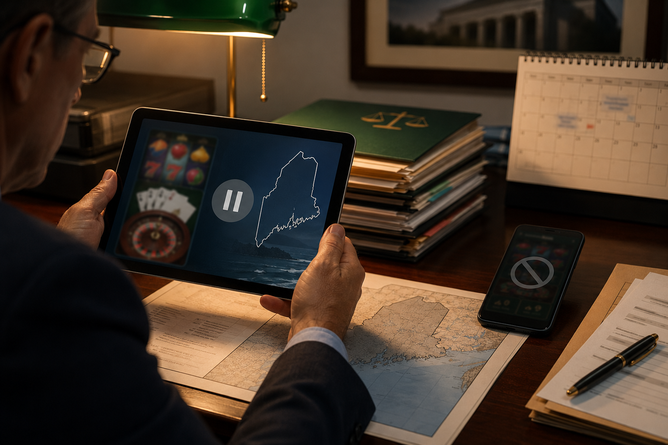
Maine is a strong example of why July 2026 online casino articles need careful wording. Some state-by-state lists count Maine as an iGaming state because it has authorized online casino gaming. Other guides separate states with active apps from states where launch is still pending. For an iPhone casino player, that difference is not minor. It decides whether a legal app can be used today.
SportsLine’s Maine online casino update says LD 1164 will make online casinos under Wabanaki Nations’ control legal in July 2026, making Maine the eighth state to authorize regulated iGaming, but it also notes that online casinos will need more time to launch, with officials hoping for early 2027.
That timeline creates a useful editorial rule: state-by-state casino app checks should separate “authorized” from “live.” A state may pass a bill, but operators still need rules, technology approvals, server controls, age verification processes, geolocation systems, and responsible gambling integrations. Those steps are not background details. They are what make legal iPhone casino access different from unregulated gambling sites.
The Maine situation also highlights why players should be cautious around apps or websites claiming broad U.S. availability. If a platform suggests that real-money casino play is available almost everywhere, that claim deserves closer review. U.S. online casino access remains much narrower than sports betting access, and broad claims can mislead users who are trying to stay inside regulated options.
What Players Should Check Before Downloading A Casino App
A responsible iPhone casino check begins before the download. The first step is confirming whether real-money online casino gaming is legal and live in the player’s state. The second step is confirming that the operator is licensed for that state. The third step is reviewing the app’s terms, payment rules, game categories, and responsible gambling tools.
This is especially important for players who travel. A user might have an account in New Jersey but lose access to casino games after crossing into a state where iCasino is not legal. Geolocation rules are designed to enforce state boundaries, and users should not try to bypass them. A legal mobile casino experience depends on the player being physically located where the operator is authorized to offer real-money casino games.
The app review should also include practical iOS details. Players should look at whether the app offers biometric login, clear account history, visible deposit limits, easy navigation between slots and live games, transparent bonus terms, and support access. Those features do not make gambling risk-free, but they help users evaluate whether the product is built for clearer account control.
This is where responsible gambling tools deserve more attention. The National Council on Problem Gambling provides the National Problem Gambling Helpline at 1-800-MY-RESET and offers support resources for people who want help with gambling behavior. A serious casino app comparison should treat those tools as part of the product, not as an afterthought.
Why State Checks Matter More Than Bonus Claims
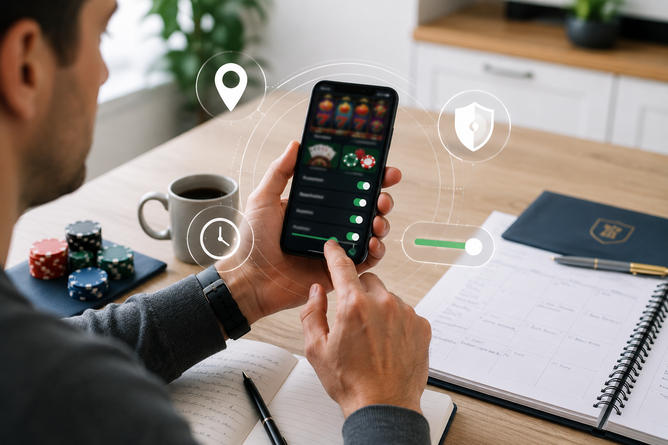
Bonus offers change quickly, and exact promotion details should come from official operator terms. State access is more fundamental. A promotion has no practical value if the app is not legal, live, and licensed where the player is located.
That is why iPhone casino players in July 2026 should treat legal-state checks as the first filter. After that, they can compare game libraries, payment methods, app stability, live dealer availability, customer support, and account controls. The best casino app for one state may not even be available in another. The best-looking slot lobby may still be irrelevant if the player cannot legally access real-money play.
The state-by-state model can feel inconvenient, but it is also the structure that gives regulated U.S. casino apps their legal identity. Licensing, geolocation, age verification, technical standards, and responsible play rules all sit behind the app icon. For players using iPhones, that hidden infrastructure matters as much as game graphics or welcome offers.
In July 2026, the smartest iOS casino comparison starts with a simple question: where are you physically located? From there, every other choice becomes clearer.
Leave a Reply