
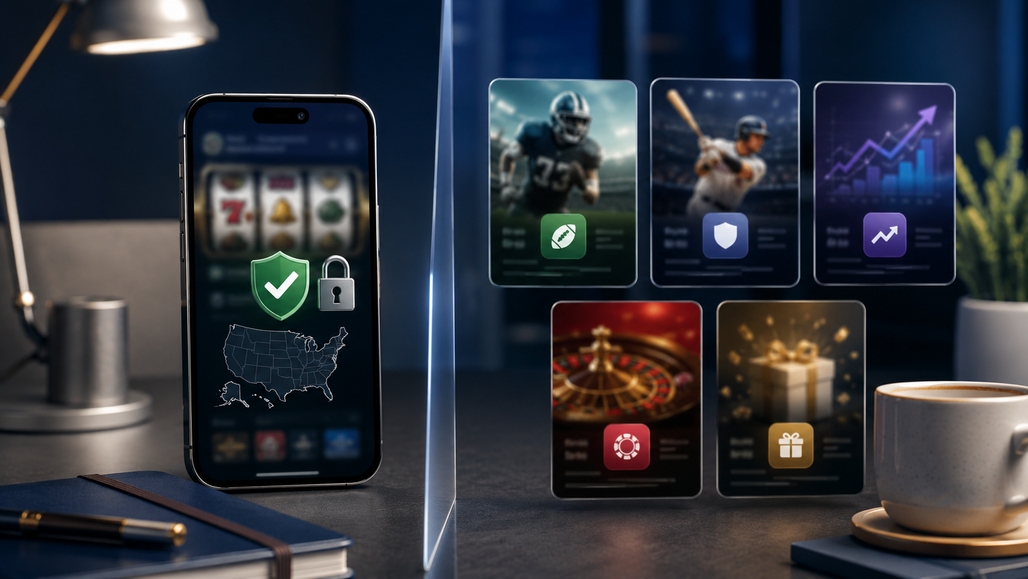
U.S. online casino guides need sharper labels in July 2026 because “online gambling” now covers several different products that do not operate under the same rules. A licensed casino app, a sportsbook, a daily fantasy sports platform, a prediction market, a social casino, and a sweepstakes-style gaming site can all appear in the same search results, but they are not the same product for an iPhone player trying to understand real-money casino access.
That distinction matters because real-money online casino apps remain legal and live in only a limited number of U.S. states. SportsBettingDime’s July 2026 online casino update lists Connecticut, Delaware, Michigan, New Jersey, Pennsylvania, Rhode Island, and West Virginia as states with legal online casinos paying out real money, while Maine is part of the newer authorization conversation but not the same as a mature live-app market.
For slotonlinecasinosios.com readers, the issue is practical. An iPhone user may search for “casino apps” and find regulated iCasino apps, sweepstakes casinos, social casino games, sportsbook apps with casino branding, DFS platforms, trusted offshore casinos, and broader online gambling directories. A guide that mixes those products without clear separation can make the market feel simpler than it is. The safer editorial approach is to define the product first, then explain where it is legal, who regulates it, and what users should check before downloading or depositing.
Why “Online Gambling” Is Too Broad For Casino App Readers

The phrase “online gambling” is useful for broad market coverage, but it can become too loose for readers comparing casino apps. Legal Sports Report’s July 2026 online gambling guide groups online casinos, sportsbooks, DFS platforms, and prediction markets under the wider online gambling umbrella, while also saying the best online gambling sites combine trusted sports betting sites, online casinos, DFS platforms, prediction markets, fast payouts, security, and licensed environments.
That kind of guide can be useful for market discovery, but a casino app reader needs a narrower filter. A licensed online casino app is built around real-money slots, blackjack, roulette, video poker, live dealer games, and casino-style account controls. A sportsbook is built around sports wagering markets. A DFS platform uses contest structures. A prediction market may focus on event contracts. A sweepstakes casino may use virtual currencies and prize-redemption rules rather than the same real-money iCasino framework.
Those differences change everything: state availability, regulator oversight, app-store presentation, payment rules, tax reporting, responsible gambling obligations, and the way users should evaluate risk. A single “best gambling sites” list can blur those boundaries if it does not separate product type from licensing model.
For iPhone users, the problem becomes sharper because the app experience can look similar across categories. A polished mobile lobby, game-like tiles, account wallet, and promotional banners do not prove that an app is a licensed real-money casino in the user’s state. The guide must explain what type of product the reader is seeing before rating the app experience.
How Licensed Casino Apps Differ From Broader Gambling Sites
A licensed casino app should be evaluated through its state approval, operator identity, game catalog, payment rules, account verification, responsible gambling controls, and mobile performance. The app may come from a major brand such as BetMGM Casino, DraftKings Casino, FanDuel Casino, Caesars Palace Casino, BetRivers Casino, Fanatics Casino, Golden Nugget Casino, Bet365 Casino, or Hard Rock Bet Casino, but brand recognition alone is not enough.
Legal Sports Report’s July 2026 casino app guide says its team downloaded real-money casino apps in the United States and tested them on iOS and Android devices, comparing app stability, speed, game variety, user ratings, and performance. It listed BetMGM Casino as the top real-money casino app in that review, with other major operators ranked for different strengths.
That testing model is more useful for casino readers because it treats casino apps as mobile products. It asks how the app works on a phone, how fast it loads, whether the lobby is organized, how the cashier performs, and whether the game experience is stable. A broader gambling directory may include casino apps, sportsbooks, DFS operators, and prediction platforms in one ranking, but those products should not be judged by the same checklist.
| Product Type | Main User Activity | Why The Label Matters |
|---|---|---|
| Licensed Online Casino App | Real-money slots, table games, live dealer games | Requires state-specific iCasino authorization and casino licensing |
| Sportsbook App | Sports betting markets and odds | Sports betting legality does not automatically mean casino gaming is legal |
| DFS Platform | Paid fantasy contests | Uses a different structure than real-money casino games |
| Prediction Market | Event-based contracts | May not be regulated as a casino product |
| Sweepstakes Casino | Virtual currency and prize-redemption model | Different rules from licensed iCasino apps |
| Social Casino | Free-to-play or entertainment-style casino games | May not offer real-money casino wagering |
This table is not just terminology. It is the difference between clear consumer guidance and a confusing article that treats unlike products as interchangeable.
Why State Availability Should Be The First Filter

A casino app guide should start with location because U.S. iCasino access is still state-by-state. A player in New Jersey or Michigan may have multiple legal real-money casino apps available. A player in California, Texas, Florida, Georgia, or many other states may see casino-style apps in search results without having legal real-money iCasino access under that state’s rules.
SportsBettingDime’s July 2026 tracker lists the active legal online casino states as Connecticut, Delaware, Michigan, New Jersey, Pennsylvania, Rhode Island, and West Virginia, with launch years ranging from Delaware and New Jersey in 2013 to Rhode Island in 2024. It also notes that many states have considered iGaming legislation without reaching a live online casino launch.
That is why a guide should not rank “U.S. casino apps” as if the same apps are available everywhere. State rules shape which operators can launch, what games they can offer, what responsible gambling tools must be present, what payment systems are approved, and how geolocation is enforced.
This also connects with the recent mobile casino boom discussion. Mobile casino growth can be strong in regulated states, but national app searches can mislead users if the article does not make state availability clear. The correct question is not “Which app is best in the U.S.?” The better question is “Which licensed casino apps are available where this player is physically located?”
Maine is a useful example of why wording matters. Some July 2026 guides describe Maine as having legalized online casino gaming, while other trackers separate authorized-but-not-live states from states with active real-money apps. Casino guides should make that distinction visible rather than treating legalization, launch, and app access as the same step.
Why Broader Gambling Lists Can Confuse iPhone Users
The iPhone environment makes product confusion easier. Users often search from the App Store, Safari, or Google and see operators with similar names, similar imagery, and similar promotional language. A sportsbook may advertise casino-style branding in a state where the sportsbook is live, but the casino product is not. A sweepstakes-style platform may resemble a slots app but operate under a different legal model. A social casino may offer casino games without real-money wagering.
That is why casino guides need a cleaner taxonomy. A licensed real-money casino app should be labeled as such only when it is operating under the relevant state framework. A sweepstakes casino should not be presented as a substitute for a regulated iCasino app without explaining how its currency and prize redemption system differ. A sportsbook should not be placed in a casino app ranking unless the article separates the sportsbook product from the casino product.
The American Gaming Association’s State of the States 2026 report shows why the distinction has financial weight. The AGA reported that America’s 493 commercial casino locations across 27 states generated $51.06 billion from traditional casino games in 2025, while separate iGaming data has become a major part of the regulated gaming discussion.
When a market is that large, product labels should be exact. A player reading a casino app guide should understand whether the article is discussing regulated iCasino apps, broader digital gambling, social play, sweepstakes formats, or sports betting platforms with casino-adjacent branding.
What A Better U.S. Casino App Guide Should Include
A stronger U.S. casino app guide should start with a simple structure: product type, legal state, licensed operator, app experience, game categories, payment rules, and responsible gambling tools. That order protects the reader from treating game count or bonus language as the first decision point.
For iPhone players, the app review should include iOS-specific details. Does the app support stable login? Does geolocation work smoothly in legal states? Are the slot categories clear? Is the cashier easy to find? Are withdrawal rules visible? Are responsible play tools accessible from account settings? Does the app separate promotional content from game navigation?
A broader gambling list may be useful for market education, but a casino app guide should stay closer to user intent. Someone searching for iPhone casino apps is usually trying to understand legal real-money casino access, mobile slots, app safety, and game availability. They are not always asking for sportsbook rankings, DFS contests, or prediction markets.
A responsible guide should also avoid exact bonus claims unless they come from official operator terms. Casino offers change quickly, and eligibility may vary by state, deposit method, account history, and promotional window. A guide that leans too heavily on bonus amounts can become outdated faster than a guide focused on licensing, usability, and player controls.
Why Responsible Gambling Tools Belong In The Same Guide
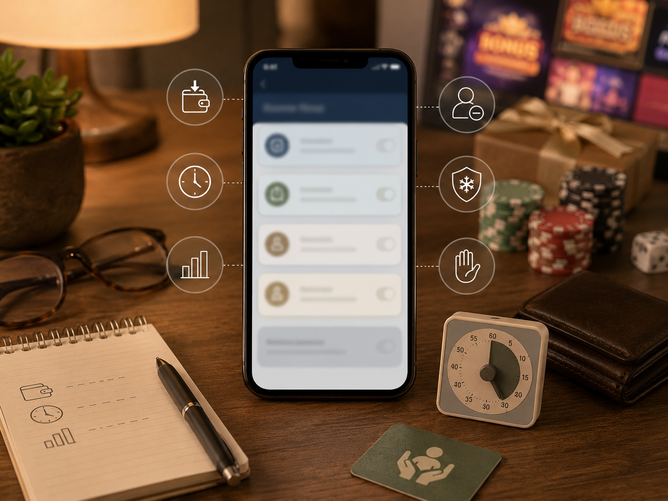
The separation between licensed casino apps and broader gambling sites should also include a responsible gambling context. A regulated casino app should make limit-setting, time reminders, account history, cooling-off tools, and self-exclusion information easier to find. Those tools are not side features. They are part of app quality.
The National Council on Problem Gambling said in 2026 that 1-800-MY-RESET is the National Problem Gambling Helpline number and described the helpline as a resource for connecting people with local problem gambling support. Existing access points, including 1-800-522-4700, remain active, with adoption varying by jurisdiction.
For casino app guides, that means responsible gambling resources should appear near discussions of app access, convenience, and mobile play. A phone makes casino games easy to open, but convenience increases the need for visible controls. If an app ranking praises speed and game variety without mentioning limits, account tools, or support resources, the review is incomplete.
This is another reason product categories matter. A licensed casino app may have state-mandated player protections. A sweepstakes-style site or offshore platform may operate under a different framework. A user cannot evaluate risk properly if the guide presents those products as if they share the same oversight.
Why Clear Casino Labels Matter More In July 2026
U.S. online gambling coverage has become crowded in July 2026, and that makes precision more valuable. Casino app readers need to know whether they are looking at a licensed real-money iCasino app, a sportsbook, a DFS platform, a prediction market, a social casino, or a sweepstakes-style site. Each category has its own rules, risks, and availability limits.
The best casino guides should not make users decode that on their own. They should separate licensed casino apps from broader gambling sites before discussing slots, bonuses, iOS performance, or rankings. That approach gives readers a clearer path: confirm the legal state, verify the licensed operator, review the app experience, check game categories, read payment rules, and use responsible play tools.
For slotonlinecasinosios.com, this is the right editorial lane. Mobile casino coverage should help iPhone users understand the difference between app polish and legal access. A clean interface matters. A large slot library matters. Fast payouts matter. But none of those details should come before the basic question of what kind of gambling product the user is actually opening.
Leave a Reply