
Our smartphones have become digital pacifiers, and we’re all guilty of mindless scrolling. I’ve watched my own screen time reports with the horror of realizing I’ve binge-watched an entire reality series in one sitting.
The data doesn’t lie. Nearly half of parents think their children spend too much time on phones. More than half of teens clock over four hours daily on social platforms alone.
We’re drowning in digital dopamine while our attention spans shrink. This isn’t about deprivation – it’s about reclaiming our minds.
Let’s explore how fewer impulses and more pauses can change our tech relationship. We’ll move from toxic codependency to a healthy partnership, using both stats and personal stories.
iOS Screen Time Setup (Limits, Downtime, App Caps)
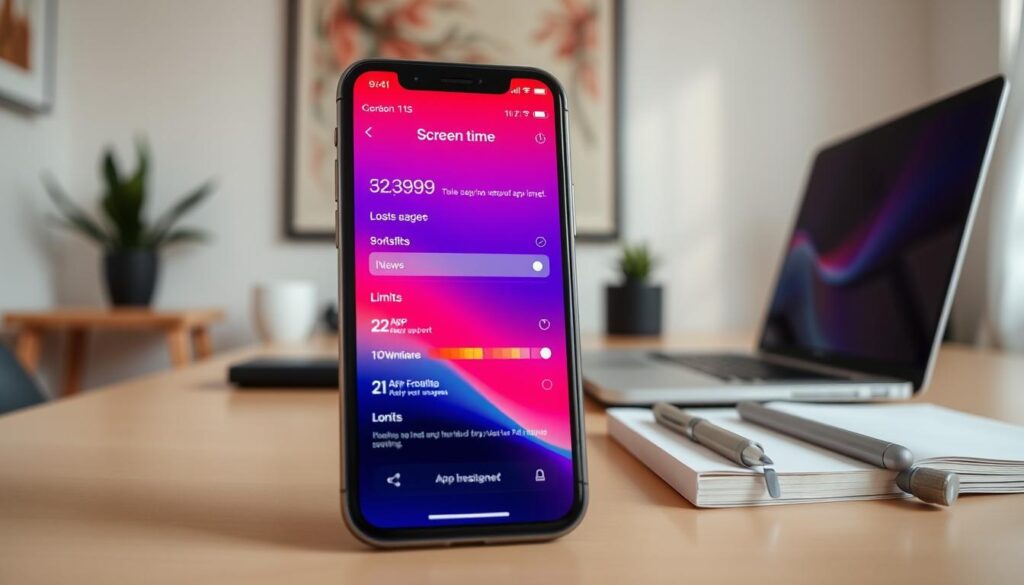
Apple’s Screen Time turns your iPhone into a tool for mindfulness. It acts like a digital conscience, reminding you when it’s time to stop. This feature helps you stay focused and avoid distractions.
Configuring Your Digital Boundaries
Setting up Screen Time is like giving your phone a new personality. It stops being a source of endless scrolling and becomes a mindful companion. This change helps you value your time and attention more.
Daily App Limits
App limits are like digital budgets for your time. You set time limits for apps or categories. This stops you from spending too much time on apps, even late at night.
Scheduled Downtime
Downtime is like digital quiet hours. Only important apps are available during this time. It helps you relax and focus on sleep and mental health.
App-Specific Caps
App caps are for controlling specific apps. You can limit social media but keep work apps open. This helps you stay focused and avoid distractions.
| Feature | Function | Psychological Impact |
|---|---|---|
| App Limits | Daily time restrictions | Creates friction and awareness |
| Downtime | Scheduled blocking | Enforces digital boundaries |
| App Caps | Category restrictions | Prevents binge behavior |
| Notifications | Warning alerts | Builds conscious usage habits |
Apple’s system is smart because it makes you think. When you hit your limit, you wonder if you really need more time on your phone. It encourages you to be more mindful.
Screen Time also has features for managing contacts and detecting harmful content. These help create a safe and balanced digital environment. It respects your time and relationships.
The system is not strict. You can ignore limits when really needed. This balance helps you stay in control without feeling trapped.
Android Digital Wellbeing: Your Phone’s Brutally Honest Intervention
Apple’s Screen Time is like a gentle reminder from your butler. But Android’s Digital Wellbeing is like a blunt friend who tells you the truth. It’s like someone holding up a mirror to your phone addiction and saying “Really? Another hour of cat videos?”
Setting Up Your Digital Conscience
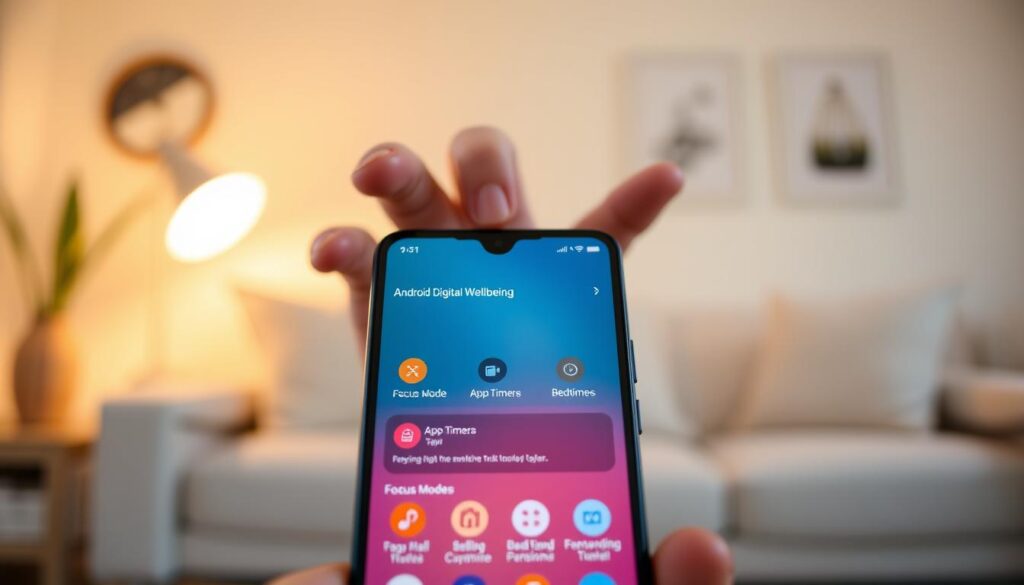
Starting with Digital Wellbeing is like adding a conscience to your device. It works on Android 9.0 or later, turning your phone into a productivity tool. Here’s how to access these tools and make them work for you:
- Open Settings and tap “Digital Wellbeing & parental controls”
- View your daily dashboard – that colorful pie chart of regret
- Set up your interventions before your willpower disappears
App Timers: Digital Speed Bumps
App timers are like speed bumps in parking lots. They won’t stop you completely, but they make you think twice. Set a daily limit for any app, and when time’s up, the app grays out like last week’s leftovers. Google admits not all apps play nice with this feature, but for most social media and gaming apps, it’s beautifully effective.
I tested this on my Pixel during writing sessions. That moment when Instagram dims out? Pure digital guilt trip. You can override it, but that extra click forces a moment of reflection: “Do I really need to see what my cousin ate for breakfast?”
Focus Mode: Digital Blinders
If the internet’s infinite scroll has shredded your attention span, focus modes are your salvation. This feature pauses selected apps during concentration periods, creating digital blinders for your easily distracted brain. It’s perfect for when you need to work but keep getting pinged by notifications.
The beauty of Android’s approach? You customize which apps get paused. Social media, games, news – choose your distractions and silence them with one tap. It’s less about blocking everything and more about creating intentional space for what matters.
Bedtime Mode: Digital Curfew
Bedtime mode is your phone’s way of saying “lights out.” It silences notifications, dims your screen to grayscale, and helps you actually sleep instead of scrolling through memes until 3 AM. I’ve found it’s the digital equivalent of tucking your phone in for the night and reading it a story instead of letting it tell you stories.
The system includes Do Not Disturb features that work seamlessly with bedtime settings. Your phone becomes a boring, black-and-white device that’s about as exciting as reading a dictionary – which is exactly what you need at 11 PM.
| Feature | Best For | Limitations | Effectiveness |
|---|---|---|---|
| App Timers | Daily usage control | Some app compatibility issues | 8/10 – creates friction |
| Focus Mode | Work sessions | Manual activation required | 9/10 – excellent for concentration |
| Bedtime Mode | Sleep hygiene | Customization limitations | 7/10 – good but not perfect |
While Android’s built-in tools might lack some third-party customization, they offer something more valuable: seamless integration. No extra apps to download, no complicated setups – just your phone gently suggesting maybe it’s time to put me down and talk to actual humans.
Casino app reality checks and time‑outs
iOS and Android have rules to help with gambling apps. But, these apps also have their own safety features. It’s like asking a fox to help secure a chicken coop.
The Digital Conscience You Can Mute
Reality checks in gambling apps are like a voice in your head. They tell you to stop, but you can turn them off. These alerts pop up after you’ve played for a while or spent a certain amount.
They might say things like:
- “You’ve been playing for 45 minutes”
- “Your session total is $150”
- “Would you like to take a break?”
But, how well they work depends on you. It’s like having a smoke alarm that asks nicely not to burn the house.
Time-Out Features: The Pause Button You’ll Probably Skip
Time-out periods show the industry knows their apps can be bad. These features let you block yourself out for a set time.
Some options include:
- 24-hour cooling off periods
- One-week breaks
- Customizable duration locks
The catch is, you need to be clear-headed to use them. It’s like needing to be sober to decide not to drive drunk.
| Feature Type | How It Works | Effectiveness Rating | Industry Adoption |
|---|---|---|---|
| Reality Check Pop-ups | Time/spend notifications | Low (user-dismissible) | Widespread |
| Voluntary Time-Outs | Self-imposed account locks | Medium (requires pre-commitment) | Growing |
| Spending Limits | Custom deposit restrictions | Medium-High (when set in advance) | Moderate |
| Self-Exclusion | Long-term account closure | High (but permanent) | Limited |
These features are a step forward, but they rely on players’ willpower. The house always wins, even when trying to be responsible.
The best reality checks often come from outside the casino. Because, when the game is designed to keep you playing, its own reminders might not be the most reliable.
Creating a “Gambling‑Free” Focus profile with allowed apps only
Think of your phone as a digital kitchen. Would you keep cookies next to broccoli? Creating a gambling-free Focus profile is like redesigning that kitchen. It makes sure temptation isn’t the first thing you see.
Both iOS and Android offer custom Focus modes. They transform your device into a specialized tool. You choose which apps get VIP access and which get ignored.
Building Your Digital Fortress
Setting up these profiles is like playing digital SimCity for your attention span. You become the urban planner of your mental real estate. You zone out distractions and create dedicated districts for productivity.
Here’s how the two platforms compare for creating your gambling-free sanctuary:
| Platform | Access Path | Key Features | Limitations |
|---|---|---|---|
| iOS Focus | Settings > Focus > “+” icon | Custom names, app allowlists, scheduled activation | Doesn’t fully block app access |
| Android Focus Mode | Digital Wellbeing > Focus Mode | Manual app pausing, quick toggle | Notification muting only |
| Both Platforms | Custom configurations | Session timers, cross-device sync | Requires manual activation |
The beauty lies in the allowed apps-only approach. You’re not just blocking gambling apps. You’re curating an entire digital environment. It’s the difference between hiding the cookies and filling your kitchen with healthy ingredients.
Why Session Timers Matter
Even your allowed apps need boundaries. Session timers act like kitchen timers for your digital consumption. They create natural pause points, reminding you that even healthy activities can become unhealthy in excess.
I set my reading app to 45-minute sessions and my messaging apps to 20-minute limits. The alerts aren’t punishments. They’re like a friend tapping your shoulder saying “Hey, remember there’s a world beyond this screen.”
The psychological genius? These profiles don’t rely on willpower. They use friction as their primary weapon. You can access blocked apps, but the extra steps create just enough delay for rationality to intervene.
It’s digital decluttering meets behavioral psychology. Your phone becomes a minimalist apartment. Everything has its place, and temptation has been architecturally designed out of existence.
Testing and adjusting alerts without nag fatigue
Finding the right alert settings is like finding the perfect porridge. It can’t be too hot or too cold. It needs to be just right, not too annoying.
Apple’s Screen Time sends gentle reminders before you hit your limits. Google’s Digital Wellbeing gives you daily reports to help you stay on track. Both let you adjust your app notifications and limits until they’re perfect.
I learned this the hard way when my phone’s alerts started to bother me more than my distractions. It’s like having a fitness trainer who yells every time you look at dessert.
Testing alert settings requires being honest with yourself. Start with strict timers and then back off until alerts are helpful but not annoying. If you ignore certain focus modes, they might not be the right time.
Apps like Aura give you even more control over how often you get alerts. The goal is to make your phone a helpful partner, not a nagging parent.
Remember, the best digital wellbeing system changes with you. It becomes a tool for building better habits, not just a blunt tool.
Leave a Reply