

The casino floor isn’t a place for guesswork. It’s a system of variables waiting to be managed.
Smart play isn’t about luck. It’s about using strategy for your wallet and calendar.
Forget old lectures on willpower. We’re talking about architecting a sustainable playstyle. This way, the fun doesn’t come with a hidden invoice.
Think of it as building a smarter system. You control the dials. The first principle? Define your boundaries before you even log in.
Modern, regulated platforms offer the tools: daily deposit caps and session timers. These aren’t shackles. For the savvy player, they’re the ultimate power-ups.
They turn a volatile hobby into a controlled, long-term entertainment equation. Why leave your enjoyment to chance?
Recognizing problem gambling signs
Problem gambling doesn’t show itself with a big sign. It sneaks up on you quietly. The key skill is knowing yourself before the casino does.
Everyone talks about “chasing losses.” But the real issue is in the quiet moments. Do you check your gambling app first thing in the morning or last at night? Do you justify playing as “research” or “stress relief”?
Bianca’s video is a perfect example. She didn’t talk about big losses at first. She shared the “deeper reasons”—the emotional gaps she was trying to fill. That’s where addiction prevention starts: with honest self-reflection.
Naman’s story is another example. A single ad led him down a path. He went from a harmless offer to a deep problem. His story shows how your smartphone can be the biggest risk, turning curiosity into a habit.
To do a self-check, look for emotional changes. Do you get irritable when you can’t play? Do you defend your gambling habits? Does gambling control your mood?
| Behavioral Area | Subtle Tell (The Whisper) | Obvious Red Flag (The Scream) |
|---|---|---|
| Digital Behavior | Checking app notifications more frequently, but briefly. | Device usage dominated by gambling; ignoring other notifications. |
| Emotional State | Mild agitation when unable to play; using play to “unwind.” | Significant mood swings tied to wins/losses; play as only coping mechanism. |
| Financial Rationalization | “It’s just my entertainment budget” while slowly increasing deposits. | Borrowing money, selling possessions, or missing bills to fund play. |
| Social Patterns | Declining some social events to play; talking more about gambling. | Isolation from friends/family; lying about time or money spent. |
The progression is clear. The whisper is about prioritization. The scream is about replacement. Your life, money, and mood get pushed aside before being taken over.
This isn’t about judging you. It’s about understanding your brain. The same tricks that make social media addictive are at play. Recognizing this is smart, not weak.
Ask yourself: Does gambling make your life bigger or smaller? Does it bring joy or just distract you from problems? These questions help you understand yourself.
True addiction prevention is about catching the early signs. It’s about noticing when “just one more spin” becomes a habit. It’s about being curious about your why more than your win. Resources like responsible gambling sites can help you with this.
The goal isn’t to shame every bet. It’s to keep control over your play. Once you understand yourself, no casino can beat your self-awareness.
Mobile app limit tools and features
The most advanced feature in any modern gambling app isn’t fancy graphics or live dealer games. It’s the tools designed to keep you safe from yourself. Think of your app as a personal control panel, not just a casino.
This isn’t just a menu. It’s your arsenal of pre-commitment devices. Real, regulated sites include these features in their apps. They show they care about responsible gaming, unlike shady sites that ignore player safety.
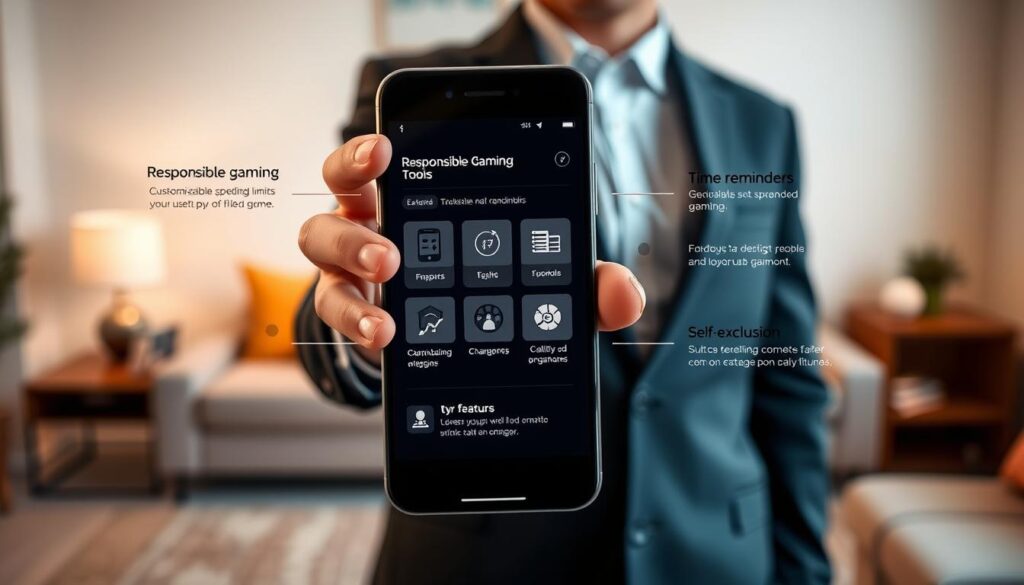
Let’s explore this digital toolkit. Each tool has a specific role in protecting you.
The Deposit Limit is your financial shield. It’s like setting a rule for your future self. You can limit daily, weekly, or monthly deposits. The app acts as a strict bouncer, refusing extra money.
The Loss Limit works in a similar way. It stops you from losing too much money. When you hit your limit, the app stops taking bets. It’s a smart way to prevent chasing losses.
The Wager Limit controls how much you bet. You can set a cap on each bet. This stops you from betting too much, even when you’re on a winning streak.
The Session Timer is like a digital nanny. It logs you out after a set time. It helps you take breaks and avoid playing too long.
Time-Outs offer a more serious break. You can choose to take a day, week, or month off. The account freezes, giving you time to think.
The last tool is Self-Exclusion. It’s like hitting the reset button. You can close your account for good. It’s a big step for when other limits aren’t enough.
So, why is this important? Using these tools shows you’re playing smart, not weak. They help you stick to your goals. The availability of these tools shows you’re on a safe, regulated platform.
Your phone is more than just a game portal. It’s a key tool for responsible gaming. You have full control over your gaming experience.
Creating accountability systems
True discipline isn’t about fighting every temptation. It’s about making your environment less tempting. We often see self-control as a personal trait, something you either have or don’t. But maybe we’re looking at it the wrong way.
Willpower is limited and can be drained quickly. A shiny pop-up or a late-night urge can use it up fast. Building an accountability system means more than just hoping you’ll stay on track. It’s about creating external structures that make lapses harder. It’s like designing your own boundaries, not just hoping they stick.
So, what does this look like in real life? It’s more about clever design than tough determination.
- The Accountability Buddy: This isn’t about finding a nag. It’s about a weekly, five-minute chat with a trusted friend. You report your progress, not confess your sins. Their role is to listen, not judge. This turns your commitment into a shared promise.
- The Data Review Ritual: Most platforms give monthly reports. But we often ignore them. Schedule a monthly review instead. Look at the numbers with curiosity, not guilt. Track trends to understand your habits better.
- The Pre-Commitment Device: Use app tools to make changes hard. Set a cooling-off period for changes. This adds a “circuit breaker” between your desires and actions.
Behind this approach is the wisdom of taking breaks and practicing mindfulness. A five-minute breathing app break is more than relaxation. It’s a reset for your decision-making.
The aim is simple. You move from relying on your willpower to a consistent system. Your self-control becomes part of the system. You’re not fighting temptation; you’ve changed the game so you’re in control.
Balancing entertainment and profit goals
The idea of making money from online slots is a myth we must debunk. It’s a dream that’s more popular than the latest TikTok challenge. But let’s look at the facts, not just the fantasy.
First, let’s talk about RTP. Return to Player is a long-term average. It’s not relevant in a short session. Chasing high RTP for profit is like trying to control the tide with a bucket.

Now, let’s discuss bonuses. Wagering requirements are like a never-ending challenge. A 100x rollover on bonus cash is designed to drain your bankroll. Adding a 72-hour time limit makes it even harder. Casinos offer “bonuses” to keep you playing, not to help you win.
The truth casinos don’t want you to know is: they never offer an incentive that doesn’t ultimately benefit them. Free spins, deposit matches, and loyalty points are all about keeping you playing. They want to keep you playing, not help you win.
So, what’s the real goal? It’s not about making money. It’s about enjoying quality entertainment without regret. This is the key to healthy habits.
Setting a budget for fun, not profit, is the shift we need. Getting two hours of fun for the price of a movie ticket is a win. This approach is not just a consolation. It’s the foundation of healthy habits. It’s about enjoying the game, not just chasing wins. This aligns with our analytical ethos of providing clear guidance. Banking on entertainment value is the only profit you can count on.
Family and social considerations
The idea that gamblers are always alone is a myth. Your gambling affects those around you, like your family. We keep track of our wins and losses, but often ignore the emotional and financial toll on loved ones.
Gaming has a hidden social cost. Maia shared how her partner’s gambling hurt her. She said, “It wasn’t until much later that I realised that it did have a really big impact on me.” The harm was slow, silent, and hard to see.
The impact of gambling is often small but adds up over time. It’s not just one big loss. It’s the little things that chip away at relationships.
- Financial Secrecy: The “my money” excuse creates a hidden economy in a shared life.
- Eroded Trust: Unexplained time, mood changes, or missing money raise questions.
- The Emotional Burden: Partners feel worried, stressed, and helpless.
Think of the harm caused by gambling as collateral damage. The player might focus on the game, but the real damage is to those nearby. Your hobby has a social impact. Are you aware of it?
Responsible gaming goes beyond just money. It considers the cost of your time and absence. How does your solo risk affect shared dreams like vacations or a home?
This isn’t about feeling guilty. It’s about being more aware. Seeing your gaming through the eyes of your loved ones is key to addiction prevention. It builds trust and communication, not just account balances.
Gambling might seem like a solo activity, but it affects your family. The cheers or silence from your loved ones should be part of your score. Thinking about your social impact is not a limit. It shows you’re mature and responsible in your entertainment choices.
Professional help resources
In the grand strategy of building a sustainable life, the smartest move is sometimes to call in the specialists.
Think about it. You outsource your taxes, your car repairs, and your home renovations to experts. Why should the architecture of your mind be a DIY project? Seeking professional guidance isn’t a character flaw. It’s the ultimate power move of a rational actor.
We’ve normalized therapy, life coaching, and financial advising. It’s time to apply the same clear-eyed logic to gaming habits. When your internal systems—your willpower, your app limits, your accountability buddies—hit their ceiling, you don’t just push harder. You upgrade the software.
That’s where resources like the National Council on Problem Gambling come in. Their work isn’t about judgment; it’s about confidential, expert-level support. The famous 1-800-GAMBLER helpline is less an emergency hotline and more a direct line to a specialist consultant. It’s a tool, plain and simple.
Let’s demystify what’s available. Consider this your brief on the professional support landscape.
| Resource Type | What It Is | Key Advantage |
|---|---|---|
| 24/7 Confidential Helpline (1-800-GAMBLER) | Immediate, anonymous phone support. Trained specialists provide crisis intervention, information, and referrals. | Accessibility. It’s there anytime, anywhere, with zero barrier to entry. No appointment needed. |
| Online Chat & Self-Assessment Tools | Digital platforms providing real-time chat support and private, guided questionnaires to evaluate your habits. | Anonymity and Introspection. Perfect for the analytical mind that wants to assess the data before a conversation. |
| Local Support Groups & Therapists | Structured group meetings (like Gamblers Anonymous) or licensed therapists specializing in behavioral addictions. | Community and Customization. Builds accountability and tailors strategies for long-term healthy habits. |
Framing this as “getting help” misses the point. You’re not helpless. You’re strategically deploying a superior resource. It’s the difference between trying to fix a complex engine with a YouTube tutorial and hiring a master mechanic.
The goal isn’t to pathologize enjoyment. It’s to architect a lifestyle where entertainment has a defined, non-disruptive place. That’s the hallmark of a sophisticated approach. Building those healthy habits sometimes requires a professional blueprint.
So, bookmark the number. Visit the website. See these resources for what they are: not a scarlet letter, but a keystone in a well-considered life strategy. The first call is just a tactical decision.
Building sustainable gaming habits
Think of sustainable gaming as your personal ecosystem, always moving. It’s a balance of informed play and set limits. You know your RTP and volatility, and you’ve set app limits. Now, you’re in control.
The smart player feels the excitement while staying detached, like a chess player. Losing is just part of the game, not a personal failure. This is responsible gaming: seeing the game for what it is.
You stop playing not when you’re out of money, but when your timer goes off. This isn’t about limits; it’s about self-control. It transforms a messy hobby into a carefully crafted experience built on intention and awareness. Thoughtful players also look for smart advantages, such as using exclusive sportsbook promo codes to enhance value without compromising discipline.
Now, you can stack the deck in your favor. Check your play and meet with your accountability partners. Let your tools help you. Sustainable habits come from combining analysis and action — and that balance is the real win
Leave a Reply