

Ever wonder how your bank knows about your late-night roulette sessions? It’s not magic. It’s pattern recognition that would impress Sherlock Holmes.
Banks use advanced algorithms to tell the difference between grocery shopping and online gambling. This technology helps keep your spending in check.
We’ll dive into how these card gambling block systems function. From rules to protecting consumers, it’s a battle between freedom and responsibility in the digital world.
The big question isn’t if these blocks are effective. It’s why we need them at all. It shows how our digital lives affect our financial habits.
How to enable on popular banks and fintech apps
Finding gambling blocks in banking apps is like playing digital hide-and-seek with your financial future. The settings aren’t exactly advertised on the home screen. You’ll need to channel your inner digital detective.
Traditional banks treat gambling blocks like state secrets. Chase requires you to navigate through “Security Settings” and then “Transaction Controls.” Bank of America hides them under “Card Controls” in their mobile app. Both make you fill out more forms than a tax return.
Fintech apps take a completely different approach. They understand that protection shouldn’t feel like punishment. Most feature a simple toggle switch that instantly blocks gambling transactions. No paperwork. No waiting. Just immediate protection.
The real magic happens with e-wallet controls. PayPal’s spending limits let you cap your transfers like putting a governor on a sports car. Venmo’s transaction monitoring uses AI that learns your spending patterns better than you know yourself.
These platforms balance user freedom with protective measures beautifully. They give you the tools without treating you like a child. The sophistication of these systems shows how financial technology has evolved from simple payment processing to genuine financial guardianship.
Enabling these features reveals how institutions view their responsibility. Traditional banks see protection as compliance. Fintech companies see it as empowerment. Both approaches get you to the same place – just through very different digital landscapes.
The best part? Once you find these settings, they’re remarkably easy to use. A few taps can create a financial safety net that works 24/7. It’s like having a personal financial bodyguard that never sleeps.
Payment method exclusions at casinos
Welcome to a world where payment processors and casinos play a game of cat and mouse. This game is as complex as a Broadway show. Your money and the casino’s cage are at the center of this fascinating dance.
Why do some payment methods get turned away? It’s because of strict rules that make you wonder. Credit cards, once popular, are now limited. Casinos and banks have made them less welcome.

Cryptocurrency is in a special spot, neither fully accepted nor rejected. It’s like a digital frontier, full of chances and risks. This makes it hard for even experienced gamblers to understand.
Ironically, cash is now the most controlled payment method. It’s like the old days of Las Vegas, but with new rules. Cash transactions are watched closely, like a hawk.
| Payment Method | Acceptance Rate | Primary Restrictions | Regulatory Status |
|---|---|---|---|
| Credit Cards | 15% | Bank blocks, merchant codes | Heavily restricted |
| Cryptocurrency | 45% | Volatility concerns, AML laws | Gray area |
| Bank Transfers | 70% | Processing delays, verification | Moderately regulated |
| Digital Wallets | 85% | Geographic limitations | Varies by provider |
| Cash Transactions | 25% | AML compliance, reporting | Highly monitored |
This world of gambling rules is complex. Payment processors and casinos keep finding new ways to outsmart each other. Your bank account is caught in the middle of this game.
The rules on payment methods show how society views gambling. Banks are trying to protect people, but it feels like they’re being too careful. Yet, players keep finding ways to gamble, showing that determination can overcome obstacles.
Setting spend alerts and low‑balance warnings
Ever felt a digital disappointment from your banking app? That’s what spend alerts are all about. They’re like a gentle nudge from your app, reminding you to stay on track.
I’ve tried these alerts a lot, like a NASA engineer checking a rocket. The best ones aren’t loud warnings. Instead, they’re soft reminders that feel like a caring parent.
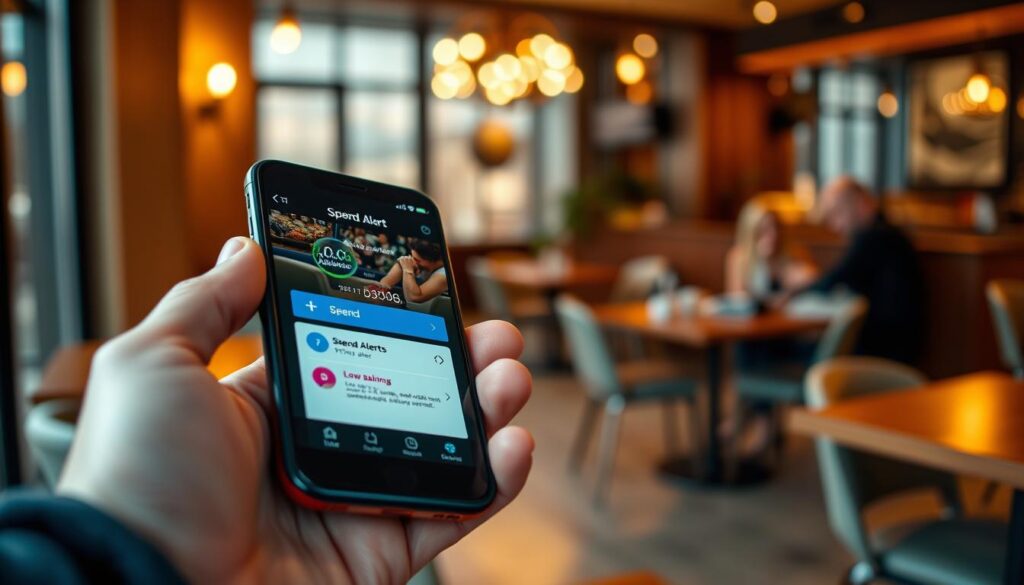
Finding the right balance is key. Too many alerts, and you ignore them. Too few, and they’re useless. The best alerts come when you’re close to spending too much.
Low-balance warnings are even smarter. They warn you before you overspend. It’s like a financial airbag that deploys early.
| Alert Type | Trigger Point | Psychological Impact | Effectiveness Rating |
|---|---|---|---|
| Gentle Nudge | 50% of budget spent | Mild awareness without panic | 8/10 |
| Concerned Friend | 75% of budget spent | Increased caution, slight guilt | 9/10 |
| Warning Signal | 90% of budget spent | Urgent reassessment needed | 7/10 |
| Balance Alert | Account below $100 | Reality check, spending freeze | 10/10 |
Setting up spend alerts is easy. Look for them in your app or online banking. You can even pick how you get them.
These tools work best when they match your spending habits. What works for me might not for you. It’s all about finding the right balance.
Well-set spend alerts are like having a financial guardian in your pocket. They’re like that friend who takes your keys when you’ve had too much to drink. Sometimes they’re annoying, but they always have your best interests in mind.
Cooling-off via savings vaults and delay features
Cooling-off periods are like counting to ten before sending an angry email. They give your rational brain time to catch up with your impulses. These mechanisms work like a cash withdrawal buffer that turns instant gratification into delayed satisfaction.
Savings vaults are the top strategy. They are like digital Fort Knox where your money is kept safe. The genius is in the inconvenience – accessing these funds requires steps that make you think twice about buying on impulse.
Modern financial apps have made this concept better with delay features. Small amounts might wait 24 hours, while bigger sums wait longer. This creates a financial digestion period where you think about transactions before they happen.
The best systems use our laziness against us. Knowing you’ll have to wait 48 hours for money can stop spending. It’s like using procrastination as a protective feature.
| Feature Type | Cooling-off Period | Minimum Amount | Psychological Impact |
|---|---|---|---|
| Basic Savings Vault | 24-48 hours | $100 | Mild impulse control |
| Graduated Delay | 1-7 days | $500 | Strong spending reconsideration |
| Extended Buffer | 7-30 days | $1,000 | Major financial planning trigger |
| Custom Withdrawal Rules | User-defined | Any amount | Personalized protection |
Withdrawal limits create a cash withdrawal buffer that makes you think about spending. Processing times are not just technical – they’re reflection periods. The 24-72 hour wait for many vault withdrawals helps you think twice.
Platforms offer different rules for different amounts. You can set cooling-off periods based on your needs. This makes your cash withdrawal buffer fit your financial personality.
These systems don’t block your money – they just make you work for it. They build your impulse control through gentle resistance. The delay teaches you, and the cash withdrawal buffer protects and educates you.
In our fast world, these barriers might seem odd. But they work because they’re different. They add friction where technology has removed it, helping you make better financial choices.
Reconciling statements without triggers
That morning-after financial review doesn’t need to feel like an interrogation. I’ve created systems for reconciling statements that make accounting a strategic analysis, not a self-criticism.
Transaction transparency without judgment is the key. Your banking app becomes a neutral observer, not a critical parent. Financial tracking should show patterns, not judge individual choices.
Color-coding turns your statement into a strategic dashboard. Green for planned fun, yellow for impulse buys, red for real concerns. This system creates a safe space while keeping you financially accountable.
Modern banking apps understand human behavior. They know the difference between calculated risks and moments of weakness. The summary features give you the big picture without focusing on every questionable decision.
This approach makes financial mindfulness practical. You review spending patterns like a scientist observing experiments. The aim is to improve, not to be perfect.
Statement reconciliation becomes a strategic analysis, not an emotional reckoning. You’re guiding future you, not judging past you. The system works because it separates financial tracking from personal worth.
Leave a Reply