

The first time you see Baccarat’s third-card rules, it might look like a spreadsheet. It’s like a stiff cocktail party topic—everyone knows it but doesn’t know how to start. Yet, at its core, the game is simple and elegant.
You’re not competing with other players or the dealer. You’re just betting on one of three outcomes: Player, Banker, or a rare Tie. The goal is to bet on the hand (Player or Banker) that gets closest to 9.
Here’s the basic idea: cards 2-9 are worth their face value, 10s and face cards are zero, and Aces are one. If your total is over nine, drop the first digit. For example, a 7 and a 6 become a 3. It’s about getting closest to 9, not 21 like in blackjack.
The seemingly complex drawing rules are actually straightforward. The dealer follows a set script so you don’t have to think. The Player and Banker each get two cards. If either gets a “natural” (an 8 or 9), they win. If not, a set of rules determines when a third card is drawn.
You don’t need to memorize the rules. Just know the game plays itself. The house advantage comes from the banker bet edge. The house takes a 5% commission on winning Banker bets, reducing the edge to about 1.06%. This small edge is what makes the game exciting.
Commission vs No-Commission Tables: effective house edge
Let’s take a close look at the 5% commission on Banker wins. For years, this 5% “rake” was a rule in baccarat. It’s a small, steady cut from your win. This rule makes the Banker bet the best choice, with a 1.06% house edge.
The “no-commission” baccarat table came later. It sounds great: “No Commission Baccarat!” But, there’s a catch. If the Banker wins with a total of 6, you only get 50% of your bet back.
So, which dealer is better? Let’s look at the numbers carefully. The math is clear.
In the traditional game, you pay a small tax on every win. It’s simple and fair. The no-commission game changes the rules for a specific win: a Banker win with a total of 6.
Here’s the important math. The chance of winning with a total of 6 is about 5.39% of all Banker wins. Under the old rules, you’d pay 5% on this win. With the “no-commission” rule, you lose 50% of your winnings on this hand.
This changes the effective house edge. The standard game has a 1.06% edge. The “no-commission” game has a slightly higher edge of about 1.46%.
| Table Type | Commission Rule | Banker 6 Win Payout | Effective House Edge on Banker Bet |
|---|---|---|---|
| Commission Table | 5% on all Banker wins | 0.95 to 1 | ~1.06% |
| No-Commission Table | No commission, except… | 0.5 to 1 (on Banker 6 win) | ~1.46% |
The accountant’s verdict is clear. The “no-commission” label is a clever trick. It replaces a small fee with a rare but big penalty. For fun players, the traditional table is better. The “no-commission” game gives the house a slight edge over time.
Choosing a no-commission table is not a bad choice. It’s about convenience and managing money over time. You’re trading a small, steady tax for a big penalty sometimes. In casinos, as in life, there’s no free lunch. It’s just different ways to pay.
Speed vs Squeeze: pace, UX, camera angles
Mobile baccarat games are like movies. Speed Baccarat is quick, like a TikTok video. Squeeze Baccarat is slow, like a thriller. It’s not just about speed; it’s about how you want to experience the game.
Speed Baccarat is fast and simple. Cards are shown right away. It’s for players who like quick action. Squeeze Baccarat, on the other hand, is slow and suspenseful. The dealer slowly shows the cards, making it exciting.
The Two Tempos of Digital Play
Speed Baccarat is for today’s fast-paced world. It’s quick and easy to play. You just tap and bet fast.
Squeeze Baccarat is different. It’s slow and dramatic. The dealer slowly shows the cards, making it exciting.
User Experience: Theatrics vs. Throughput
The UX of these games is very different:
- Speed Baccarat UX: It’s simple and fast. The camera shows the whole table, making it easy to see.
- Squeeze Baccarat UX: It’s more like a show. The camera zooms in on the dealer’s hands, making it exciting.
Speed Baccarat is for those who like quick answers. Squeeze Baccarat is for those who enjoy the slow build-up. It’s like a fast coffee versus a slow whiskey.
| Aspect | Speed Baccarat | Squeeze Baccarat |
|---|---|---|
| Pacing | Extremely fast (hands per hour: 120+) | Slow, deliberate, with dramatic pauses |
| Primary Camera | Fixed, wide-angle for table overview | Dynamic, with close-up squeeze camera on dealer’s hands |
| Player’s Role | Fast decision-maker, analyst | Spectator, participant in a ritual |
| Core Appeal | Volume, action, quick results | Suspense, drama, the “reveal” |
The Camera Tells the Story
The camera angle shows what the game is about. Speed Baccarat shows everything quickly. Squeeze Baccarat focuses on the dealer’s hands, making it suspenseful.
Choosing between Speed and Squeeze is about what you want. Do you like fast action or slow suspense? The squeeze camera makes Squeeze Baccarat special, like a director in a movie.
Practical Strategy: banker bias, avoiding tie as main bet; side bets caution
If baccarat were a diet plan, the Banker bet would be like kale smoothies—good for your wallet. The “banker bias” is real, not just a myth. It’s a math rule as sure as gravity.
The Banker bet wins more than 50% of the time. The casino takes a 5% commission on wins. This small edge is why the Banker bet is safer. It’s not just luck; it’s math.
The Player bet is riskier, with a 1.24% house edge. The Tie bet is a bad choice, with a huge edge. Choosing the Banker bet means a 1.06% edge, saving you money over time.
Let’s be blunt: the house always wins. But you can find the smallest edge. The table below shows the best choices.
| Bet Type | House Edge | Payout | The Sage’s Verdict |
|---|---|---|---|
| Banker | 1.06% | 0.95 to 1 (5% commission) | The workhorse. Boring, consistent, and statistically your best ally. |
| Player | 1.24% | 1 to 1 | A fine, if slightly less optimal, alternative. The reliable sedan. |
| Tie | ~14.4% | 8-to-1 or 9-to-1 | A statistical black hole. The siren song of the sucker bet. |
The Tie bet has a huge 14.4% house edge. It’s not a good bet. Betting on a Tie is like throwing money away.

The “roads” in baccarat are just for fun. They don’t help you win. The Banker’s edge is all you need to know.
Chasing streaks or overthinking the roads is pointless. The cards don’t remember, and the roads are just maps of the past.
Side bets like Dragon Bonus are a waste of money. They have huge house edges. They’re the casino’s way to make more money off you.
The Sage’s advice is simple: Bet Banker. Ignore the Tie. Avoid side bets. It’s all about math, not luck.
Session Structure: 50–100 hands pacing, unit caps, ceilings
Forget the all-or-nothing gambler’s sprint. In mobile baccarat, a session is like a military campaign. You’re the general, your bankroll is your army, and your strategy is your battle plan. The goal is to make a series of calculated moves, not a single big bet.
Your main tool is pacing. Aim for 50 to 100 hands for a focused session. Less than 50 hands, and the game’s variance can overwhelm you. More than 100 hands, and you’ll get tired. Decide your goal before you start betting.
Your key principle is unit sizing. Your standard bet size is the basic unit of your strategy. It’s wise to cap your unit at 1% of your session bankroll. This rule helps protect you from big losses.
Set two important limits before you start:
- The Loss Ceiling (The Cut-Off): Stop when you’ve lost 50% of your bankroll. If you started with $200, stop at a $100 loss. No going over this limit.
- The Win Ceiling (The Victory Condition): Know when to stop with a profit. Use the “double-or-quit” rule. If you’ve doubled your bankroll, bank at least half your winnings. This way, you ensure a profit.
Your unit size is your tactical unit. The table below shows how to plan your attack based on your bankroll. The “Loss Limit” column is your hard stop for the session.
| Session Bankroll | Unit Size (1%) | Recommended Unit Cap | Loss Limit (50% of Bankroll) |
|---|---|---|---|
| $100 | $1 | 2-3 Units | $50 |
| $200 | $2 | 2-3 Units | $100 |
| $500 | $5 | 2-3 Units | $250 |
| $1,000 | $10 | 2 Units | $500 |
This isn’t about getting rich quick. It’s about managing risk and probability. The “roads” on your screen are just a record, not a prediction. Don’t chase patterns; each hand is a new event. Your session structure helps you stay disciplined.
Structure your play. Break a 50-hand session into 5 sets of 10 hands. Take a minute to check your limits after each set. This pace helps you stay focused and disciplined. You’re not just betting on cards; you’re managing a limited resource over a set period. The table doesn’t care about your feelings. Your session structure is your only defense.
Streak Myths Debunked: independence of hands, roads as entertainment
Let’s talk about the elephant in the casino: our brains’ need for patterns. You’ve seen it—the player focused on the screen, convinced the next hand is “due.” They think a streak of Banker wins means Player is “due” for a win. This is the Gambler’s Fallacy, a trap in Baccarat.
Each hand is independent. The shoe has no memory, and the deck has no conscience. Believing a hand is “due” is like thinking a coin will land on heads after tails. The cards don’t care. The RNG (or the dealer’s shuffle) doesn’t either.
The “roads” in Baccarat are interesting. They’re not crystal balls. They’re like Rorschach tests for gamblers. Seeing a “dragon” of seven consecutive Banker wins, your brain might think it’s the Player’s turn. But the next hand is as random as the first.
The “roads” are a minimalist art form, showing pure chance. They are a road map to nowhere, a Rorschach test for gamblers, and a form of minimalist, real-time data art. They exist for entertainment, to create a story where none exists.
No-commission Baccarat has a unique twist. At a no-commission table, the house edge is different. There’s no 5% commission on winning Banker bets, but the rules are tweaked. This makes no-commission Baccarat a different strategic landscape.
You’re not chasing patterns; you’re managing a known, slightly different, mathematical edge. Betting based on the “road” at a no-commission table is like using a weathervane to predict the stock market.
So, appreciate the roads for what they are: a hypnotic, minimalist light show. They are not a cheat code. They are the game’s abstract art installation. Betting systems that chase “trends” on the Bead Plate are, statistically, just expensive ways to watch a light show.
The next time you see a “banker streak” on the Big Road, don’t see a prophecy. See a random, beautiful, and ultimately meaningless pattern—a Rorschach test where the only reflection is your own desire to find order in the beautiful, chaotic noise of shuffled cards.
Mobile Tips: chip presets, confirmation toggles, squeeze view
Switching from a physical casino to a mobile device can be a big change. But, your phone can be more than just a game. With a few tweaks, it can become a powerful tool for playing baccarat.
Chip Presets: Your Digital Croupier
Looking for chip denominations in the heat of the game is a rookie mistake. Modern baccarat apps offer more than just tapping to bet. Find the chip presets to set your bets quickly.
Program your common bets, like a 5-unit bet on Banker and a 1-unit side bet. This isn’t just about speed; it’s about strategy. A preset bet of $25 on Banker and $5 on Player for insurance? Set it once, tap once. It removes hesitation, and in a game of milliseconds and momentum, that’s everything.
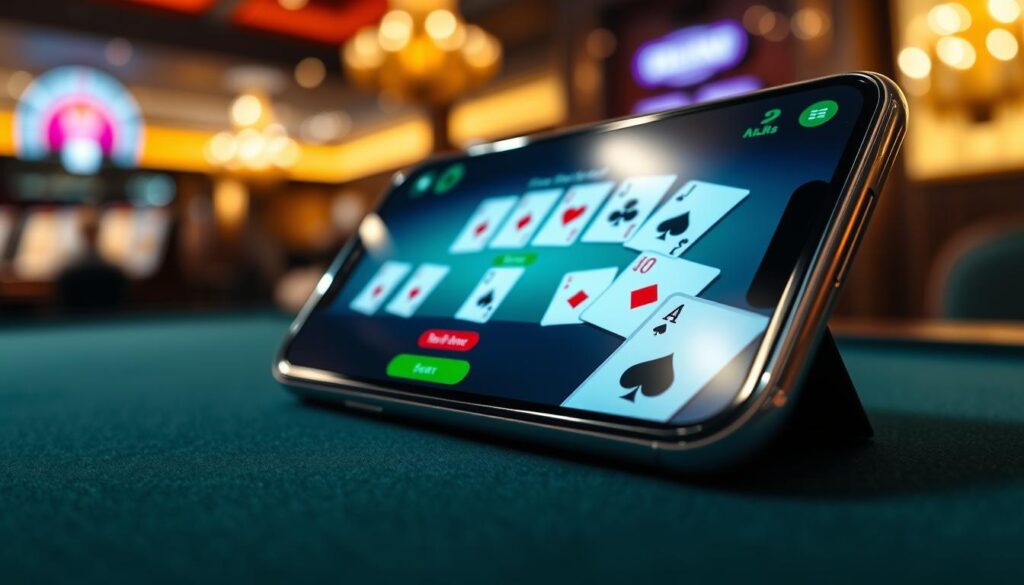
Ever accidentally bet too much? The solution is the bet confirmation toggle. Turn it on. This adds a step before your bet is placed. It’s like a croupier asking, “Final bet, sir?” It’s not for the paranoid; it’s for the prepared.
Also, look for the “Double Tap to Bet” or “Confirm Bet” toggle. This is your insurance against a clumsy thumb or a rogue notification.
The “Squeeze” in Your Pocket
The squeeze camera on your phone is more than a gimmick. It’s a tool for strategy. A good app lets you pinch, zoom, and rotate cards. This feature isn’t just for show.
Use it to control the reveal, building suspense. It’s a tactile experience that bridges the digital-physical gap. It’s not about seeing the card; it’s about controlling the narrative of the reveal.
Practical Interface Hacks
- Orientation is Key: Lock your screen rotation, then play in landscape. This gives you the widest view of the table and your betting area, mimicking the eagle-eye view of a pit boss.
- Sound, But Less: Turn on subtle audio cues for bets placed or wins, but for the love of all that is holy, mute the music. You need to hear your own strategy, not a tinny loop of elevator jazz.
- Data Saver Mode: If you’re not on Wi-Fi, most apps have a data-saver or “lite” stream for the video feed. The squeeze camera might be slightly less fluid, but your bankroll and data plan will thank you during a long session.
Mastering mobile baccarat is about programming your phone to your will. Set your presets, toggle your confirmations, and master the squeeze camera. Your phone isn’t a mini-casino; it’s a 24/7 high-limit room in your pocket. Now, go make that tiny screen your throne.
Etiquette & Table Selection: limits, players, latency
Playing live baccarat is more than just betting on Banker. It’s about knowing the game’s social rules. This means not spilling drinks and choosing the right table for your budget. Remember, there are real people on the other side of the screen.
Choosing the right table is your first move. It’s about the table limits and how many players are there. A $5 table is fast-paced, while a $100 table is more serious. Pick a table that fits your budget well.
A full table is good for the game’s flow. But too many players can make it feel like watching a show. Aim for 2-3 players for the best experience.
Latency can ruin online play. A small delay can cost you a win. Make sure your internet is fast and choose servers close to you. Avoid playing on public Wi-Fi. Your live baccarat should be smooth.
Etiquette in live dealer games is interesting. The chat box is for everyone, not just you. Be polite and respectful. Tipping is optional but shows appreciation for the dealer.
Remember, you’re part of a shared experience. Don’t criticize other players or the dealer. The game’s patterns are for fun, not for arguments. Focus on your own game and enjoy the company of others.
Responsible Play: time caps, loss guards
Forget the myth of the “sure thing” at the baccarat table. Your time and money are limited. The banker bet edge is smart, but the real strategy is before you start. It’s about protecting yourself, not just playing cards.
A time cap is like a kitchen timer for your brain. It stops you from losing too much time. A loss guard is like a financial circuit breaker. It helps you walk away when you should, even with the 1.06% banker bet edge.
The table below shows how these ideas help you defend against the house. They give you a real chance to win.
| Concept | Time Cap | Loss Guard |
|---|---|---|
| Purpose | Manages mental fatigue and emotional drift. | Preserves your bankroll from a single bad session. |
| How it Works | A hard stop at a pre-set time (e.g., 60 minutes). | A hard stop at a pre-set loss amount (e.g., 50% of your session bankroll). |
| Example | Play from 8:00-9:00 PM, then quit. No “just one more hand.” | Bring $200. If you lose $100, you stop. The other $100 is for dinner. |
| Mental Benefit | Prevents “chasing” losses in a tired state. | Prevents a bad run from wiping out your entire bankroll. |
The 1.06% house edge on the banker bet is a fact. It’s small but constant. You can’t control the cards, but you can control your time and money. A time cap stops you from playing too long, and a loss guard protects your money.
This approach changes how you think. It’s not about winning a certain amount. It’s about playing smart. When the timer goes off or you hit your loss limit, you stop. This is not a loss; it’s a smart move to keep your money and your mind clear.
This is the real banker bet edge. It’s not just knowing the math. It’s knowing when to leave the table. The house has a small edge, but you have the power to walk away. That’s the smartest bet you can make.
Quick Start: 10-hand warm-up flow
Think of your first ten hands as a mental warm-up. It’s not about winning. It’s a way to quiet your mind and focus on playing well.
Start by sitting out the first two or three deals. Watch the “roads” on screen. Don’t bet. You’re gathering information like a scout.
For hands one through five, bet the smallest amount on the Banker. You’re looking for patterns, not making money. Is the shoe choppy or streaky? Are ties common?
Next, bet on the Banker for five hands. Keep your bet size the same. This is about discipline, not making more money. The “no-commission” tables are good for this, as they often have a lower edge on the Banker bet.
By hand ten, you’re ready. You’ve moved from watching to playing with strategy. The table’s rhythm, not luck, will guide you now.
Leave a Reply